
Last updated October 16, 2026
 Fire & smoke cleanup
 Mold remediation
 Storm response
 Sewage cleanup
 Reconstruction
Free visual inspection and a written scope of work before any mitigation begins - photos, moisture readings, and drying logs go in your claim file
The scope we write is the scope we bill. Anything new gets shown to you, in writing, before we touch it.
Get your free estimateHow to Hire a Damage Restoration Contractor in Yonkers: A Step-by-Step Guide
Here’s a fact most Yonkers homeowners don’t know until it’s too late: New York State has no dedicated license for water damage restoration. Anyone with a wet-vac and a printed flyer can call themselves a restoration company. That single regulatory gap is why the vetting process matters more in this trade than almost any other home service. This guide gives you a scripted, step-by-step process you can run in under 30 minutes, even while your basement is still taking on water in Yonkers, and you can find more guides & resources on our blog.
Quick Answer
To hire a damage restoration contractor in Yonkers, verify four credentials before anyone enters your home: IICRC certification, a valid NY Home Improvement Contractor license, general liability insurance naming you as certificate holder, and workers’ comp coverage. Then get a written scope of work with a firm price before any demolition starts, and ask for the name and photo of the specific technician who will arrive at your door.
Restoration work we handle
Table of Contents
- Why Hiring in Yonkers Is Different From Any Other Trade
- The Four Credentials That Actually Matter in New York
- How to Check Each Credential in Under Five Minutes
- The Phone Call Script to Run Before Anyone Arrives
- Direction-to-Pay and Assignment-of-Benefits Forms: Read Before You Sign
- Red Flags in the First 10 Minutes On Site
- Using Yonkers Permit Records to Verify Accountability
- What Restoration Actually Costs in Yonkers
Why Hiring in Yonkers Is Different From Any Other Trade
Hiring a plumber or a painter happens on your schedule. You collect three quotes, check references, sleep on it. Water damage doesn’t offer that luxury. A supply line bursts in your Yonkers home at 2 a.m. and by 8 a.m. you’re calling numbers off a Google search while standing in an inch of standing water. That compressed timeline is exactly what predatory operators count on. They know you’re not comparison shopping. They know your insurance adjuster hasn’t called you back yet. They know you’ll say yes to almost anything to make the water stop.
Add to that a second layer unique to this region: Yonkers sits in Westchester County, where housing stock ranges from pre-war Victorians in Park Hill to mid-century split-levels in Colonial Heights to newer construction along Central Park Avenue. Each of those builds handles water differently. A 1920s fieldstone foundation wicks moisture in ways a 1990s poured concrete slab never will. Local climate compounds it. Our freeze-thaw cycles crack supply lines in winter, and our summer humidity makes slow-dried drywall a mold incubator within 48 to 72 hours, which is why Seasonal Damage Restoration Care for Yonkers: Year-Round Homeowner’s Guide matters for local homeowners. A contractor who doesn’t know Westchester’s building stock and seasonal patterns will misdiagnose the first time they look.
At Marsh Water Damage Yonkers home, we’ve spent years walking into the same scenarios over and over: the finished basement in Crestwood that flooded during a nor’easter, the third-floor bathroom in Ludlow that soaked through two ceilings below it, the boiler room in Dunwoodie that leaked for a week before anyone noticed. Those jobs taught us that the right questions, asked in the right order, save homeowners tens of thousands of dollars and months of secondary damage.
The Four Credentials That Actually Matter in New York
Forget review platforms as your first filter. Reviews can be bought, gamed, or simply old. Start with documents that can be verified independently. In New York State, four credentials separate licensed, insured, trainable professionals from everyone else.
- IICRC Certification. The Institute of Inspection, Cleaning and Restoration Certification sets the technical standard for water damage restoration. A technician holding IICRC Water Damage Restoration Technician (WRT) or Applied Structural Drying (ASD) certification has passed rigorous testing on extraction, drying science, and microbial control. Ask for the individual technician’s certification number, not just the company’s. A company can claim IICRC affiliation while the person in your living room has no formal training.
- NY Home Improvement Contractor (HIC) License. Westchester County requires home improvement contractors to carry a valid license issued by the county’s Department of Consumer Protection. This license is not restoration-specific, but it is the minimum legal bar for any company performing structural work in Yonkers. A contractor without a valid HIC license is operating outside the law. You can verify a license number in under a minute on the Westchester County website.
- General Liability Insurance With a Certificate Naming You. General liability protects you if the contractor damages your property, and it should at least address water extraction, drying, demo, and minor rebuild work. The policy itself is not what protects you. What protects you is a certificate of insurance that lists you and your property address as a certificate holder. Demand this before any work begins. Any contractor who hesitates is signaling something you don’t want to learn the hard way.
- Workers’ Compensation Coverage. If a technician is injured in your home and the contractor lacks workers’ comp, you can be held liable. In New York, that exposure is real and litigated. Ask for a copy of the workers’ comp certificate. Verify the policy is active. A gap here can turn a $2,000 drying job into a six-figure personal liability claim against your homeowners policy.
These four items are the floor, not the ceiling. At Marsh Water Damage Yonkers, we hold credentials through the IICRC, RIA, and IFA, and every technician carries photo ID and undergoes background verification before stepping onto your property. But don’t take our word for that. Take the same documents from any contractor you’re considering and verify them yourself.
How to Check Each Credential in Under Five Minutes
Verification is not optional, and it’s faster than you think. Here is the exact sequence we recommend running once you have a contractor’s documents in hand, drawn from our Water Damage Restoration Maintenance Checklist for Yonkers Homeowners.
Step 1: Check the Westchester County HIC License
Go to the Westchester County Department of Consumer Protection’s license lookup tool. Enter the contractor’s license number exactly as printed. The result should show the legal business name, the license type, and the expiration date. If the name on the license doesn’t match the name on the truck or the paperwork, stop. If the license is expired, stop. If the number doesn’t return a result at all, stop. This check takes 90 seconds and eliminates the most common layer of unqualified operators in Yonkers.
Step 2: Verify IICRC Certification Directly
The IICRC maintains a public registry of certified technicians. Enter the individual’s name and certification number. Confirm the certification status is active and the certification type matches the work being performed. Water damage restoration requires WRT or ASD. If the technician only holds a carpet cleaning certification, they are not qualified to run drying equipment in your flooded basement.
Step 3: Call the Insurance Agent, Not the Contractor
The general liability and workers’ comp certificates should list the insurance agent’s name and phone number. Call that agent. Confirm the policy is active, the coverage amounts match what’s printed, and you are in fact a named certificate holder for the general liability policy. This is the step most homeowners skip, and it’s the one that would have caught every insurance gap case we’ve ever been called in to clean up.
Step 4: Pull the Company’s Yonkers Permit History
The Yonkers Building Department maintains records of permits pulled for residential work. A contractor who has done legitimate restoration work in Yonkers will have a permit history. A contractor who has been working in the city for years without pulling a single permit is either doing small jobs that don’t require permits, or they’re avoiding oversight. More on this in the permit section below.
The Phone Call Script to Run Before Anyone Arrives
Before you let any contractor through your front door, you need answers to a specific set of questions. Write these down or keep them on your phone. You’re not being difficult. You’re doing what a careful homeowner does in a city with no dedicated restoration license. Here is the word-for-word script we give to Yonkers homeowners who call us while standing in a flooded room:
- “What is your Westchester County HIC license number, and will you text me a photo of it right now?” A legitimate contractor has this memorized or can produce it in under a minute.
- “Who specifically will be at my door? I need their name and a photo before they arrive.” This is the question that separates professionals from random labor. A real company knows exactly which technicians are dispatched to every job. If they can’t tell you who’s coming, they don’t have a dispatch system, which means they don’t have accountability.
- “Will you give me a written scope of work and price before any demolition starts?” If the answer is any version of “we’ll figure that out when we see it,” keep looking. Demolition without a written scope is how a $1,800 water extraction becomes a $9,000 gut job mid-process.
- “Will you name me as a certificate holder on your general liability policy?” If they seem confused by the question, that’s your answer. Contractors with legit coverage know exactly what a certificate holder is because their insurance agent issues them every week.
- “Can you confirm your workers’ comp policy is active for the exact dates of this job?” Ask for the policy number. Verify it later. But the immediate reaction on the phone tells you a lot.
At Water Damage Restoration in Yonkers, every call is answered by a live person 24 hours a day, seven days a week, including holidays. That’s not a call center. It’s a dispatcher who knows which crews are rolling and can tell you a technician’s name and ETA while you’re still on the phone.
Direction-to-Pay and Assignment-of-Benefits Forms: Read Before You Sign
Two documents trip up more Yonkers homeowners than any others: the direction-to-pay form and the assignment-of-benefits, often called an AOB. Both are standard in the restoration industry, and both have legitimate uses. Both are also frequently abused when a homeowner is overwhelmed and signing anything placed in front of them.
A direction-to-pay form tells your insurance company, in effect, “pay this contractor directly from my claim proceeds.” It does not transfer ownership of your claim. It simply directs payment. Used properly, this speeds up the process and lets the contractor get paid without you fronting cash out of pocket. The risk: if your claim gets denied or only partially approved, you, not the contractor, remain responsible for the unpaid balance. Read the exact language before you sign. Confirm the document only applies to work actually performed and approved in writing.
An assignment-of-benefits goes further. It transfers your rights under the insurance policy to the contractor, meaning the contractor can bill your insurer directly, negotiate with your adjuster, and even file a lawsuit in your name without your involvement. In some states, AOB abuse has become a crisis. In New York, it’s less common but still present. If a contractor asks you to sign an AOB, ask one question: “What happens if my claim is denied?” If the answer is vague, walk away. A reputable contractor will explain, in writing, that you remain responsible for the contracted amount and that the AOB simply streamlines payment.
Marsh Water Damage Yonkers has never required an AOB, and we don’t intend to start. We work directly with your adjuster, provide photo-documented assessments, and bill through the appropriate channels without taking control of your claim away from you.
Red Flags in the First 10 Minutes On Site
The moment a restoration crew walks through your door, the first ten minutes tell you almost everything. Here are the signs we’d tell a family member to watch for.
- No written scope before work begins. A professional restoration company will write down, on paper, exactly what they propose to do, what it will cost, and what the drying goals are. If the first thing a crew does is plug in equipment without handing you a document, they’re betting you won’t ask questions. That bet usually pays off for them.
- Vague line items like “labor and materials.” A legitimate scope lists specifics: “Remove and dispose of 400 sq ft of wet carpet and pad in finished basement, treat subfloor with antimicrobial, set 6 air movers and 2 dehumidifiers.” “Labor and materials” is a blank check.
- Pressure to start immediately without an estimate. Speedy response is good. A refusal to give you a number before turning on equipment is not. Yes, water damage mitigation is urgent. But five minutes to write a scope won’t change the outcome. If someone tells you “we need to start right now before it gets worse” while also refusing to tell you what it costs, that’s a negotiation tactic disguised as urgency.
- No moisture mapping or psychrometric readings. A trained technician uses a moisture meter to map the extent of the water migration, takes psychrometric readings (measuring the moisture in the air) to establish drying goals, and documents everything. If a crew shows up with a wet-vac and no meters, they’re not doing restoration. They’re doing cleanup. Those are different jobs with different prices and different outcomes.
- Technicians who can’t or won’t show ID. You asked for a name and photo on the phone. If the person at your door doesn’t match, shut the door. Not metaphorically. Literally close the door. The Threshold Standard we apply to every Marsh job means every technician is background-checked, identity-verified, uniformed, and photo-badged, and shows that badge before stepping inside. If that’s not the standard at your door, it’s not the standard anywhere.
Using Yonkers Permit Records to Verify Accountability
Here’s a trick most homeowners never think to use, and it’s the single most revealing check you can run on a restoration contractor in Yonkers: pull their permit history.
The Yonkers Building Department processes permits for work that touches structure, electrical, plumbing, and sometimes HVAC. A restoration job that includes removing drywall below the flood line, replacing insulation, or repairing structural framing generally requires a permit. A contractor who has been doing this work in Yonkers for years should have a paper trail.
To check, contact the Yonkers Building Department or use their online permit search if the property address is known. Ask for permit history on a few addresses where the contractor claims to have done restoration work. If the contractor gives you three past job addresses and none of them have permits on file, that’s a pattern. The contractor is either doing unpermitted work, which exposes you to code violations and insurance complications, or they’re fabricating references. Either way, you’ve learned something useful.
Why does this matter so much? A contractor who avoids permits is a contractor who avoids accountability. Permits trigger inspections. Inspections create a public record. A public record means that if something goes wrong six months later, there’s a paper trail connecting the work to the contractor who did it. Without a permit, that connection disappears, and so does your leverage.
At Mold Remediation in Yonkers, we pull permits on every job that requires one, and we’ll tell you upfront which jobs don’t. That’s not a burden. It’s the system working the way it’s supposed to.
What Restoration Actually Costs in Yonkers
Here’s the question every homeowner asks and almost no contractor answers online: what does this actually cost in Yonkers? Here are realistic ranges based on what we see across Westchester County. These are not quotes. Every job is different. But these numbers will tell you whether a bid is reasonable or predatory.
| Service | Typical Yonkers Range | What’s Included |
|---|---|---|
| Water extraction (single room) | $800 – $1,800 | Extraction, initial cleanup, moisture assessment |
| Structural drying (3-5 days) | $1,500 – $3,500 | Air movers, dehumidifiers, daily monitoring, psychrometric readings |
| Mold remediation (small contained area) | $2,000 – $6,000 | Containment, HEPA filtration, removal, antimicrobial treatment |
| Storm damage board-up and tarping | $500 – $1,500 | Emergency board-up, roof tarping, temporary protection |
| Full basement flood restoration | $4,000 – $12,000+ | Extraction, drying, demo, disposal, antimicrobial, rebuild coordination |
These ranges reflect the Yonkers market specifically. Costs run slightly higher in Westchester than in the Bronx or upstate, driven by local labor rates, permitting fees, and the age of housing stock. An older home in Park Hill with plaster walls will cost more to dry correctly than a newer build in Northwest Yonkers.
One more consideration: equipment quality dictates drying speed, and drying speed dictates final price. Commercial-grade equipment from Dri-Eaz and similar manufacturers moves air and removes moisture far faster than consumer-grade fans. That means fewer days on site, lower total energy use, and a restoration that’s genuinely dry, not just surface-dry. The cheapest bid often runs the longest and leaves behind a secondary problem. At Storm Damage Restoration in Yonkers, we run Dri-Eaz, Phoenix, XPOWER, B-Air, and Injectidry equipment, the same gear used in large commercial losses, because it does the job faster and better. We’d rather be on your job for four days and be done than twelve days and still chasing moisture in the baseboards.
Common Mistakes to Avoid
- Signing a work authorization before reading it. Work authorizations often include clauses about payment responsibility, arbitration, and lien rights. Read every line. If you’re too stressed to read it, have someone else read it. If the contractor won’t give you time to review, that’s a decision in itself.
- Using the first company that appears in paid search results. Paid ads are not endorsements. The top three Google results for “water damage Yonkers” are companies paying to be there. That doesn’t mean they’re bad. It means you still have to run the verification checks.
- Assuming your insurance company will handle contractor selection. Your insurer may recommend preferred vendors, but you are never required to use them. New York law protects your right to choose your own restoration contractor. A contractor recommended by your adjuster may still be excellent, but they answer to the insurer’s pricing schedule first and your drying goals second.
- Waiting to call until you’ve cleaned up some of the water yourself. The sooner a professional arrives with extraction equipment, the less water wicks into drywall and subfloor. Every hour you spend with a mop and bucket is an hour of water migration. That’s not a convenience issue. It’s a structural one.
- Accepting a quote over the phone without a site visit. A contractor who quotes a water damage job without seeing it is guessing. A contractor who demands a site visit before quoting is doing the job properly. One of these protects you. The other protects them.
- Not asking about the drying plan and training behind it. Drying a structure is a science. It requires measuring humidity, calculating vapor pressure, and monitoring conditions daily. A contractor who can’t explain their drying plan in plain language doesn’t have one.
- Choosing a contractor only on price. Restoration is not a commodity. The cheapest quote often means inferior equipment, untrained labor, and no drying protocol. In Yonkers, we consistently see second jobs where a homeowner paid a cut-rate crew first and then paid us to undo the damage the first crew left behind.
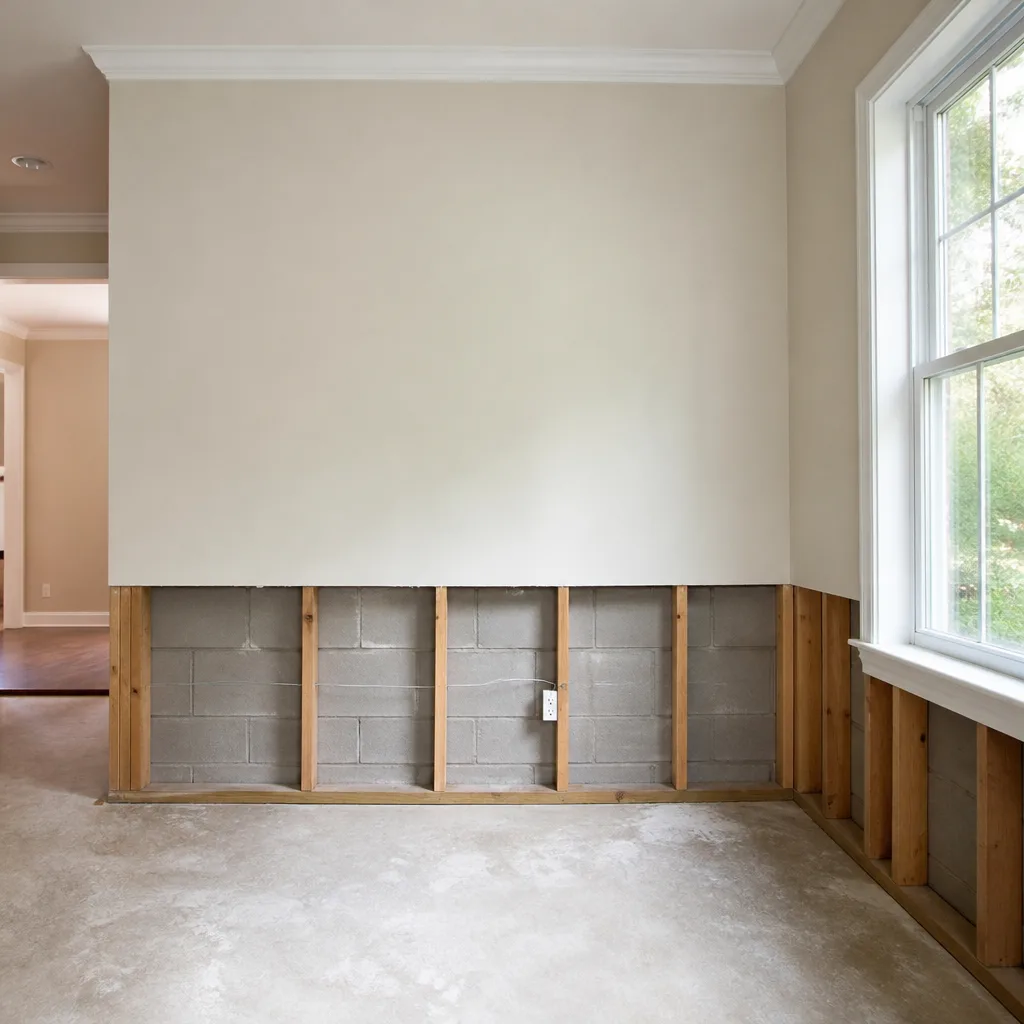
See the difference
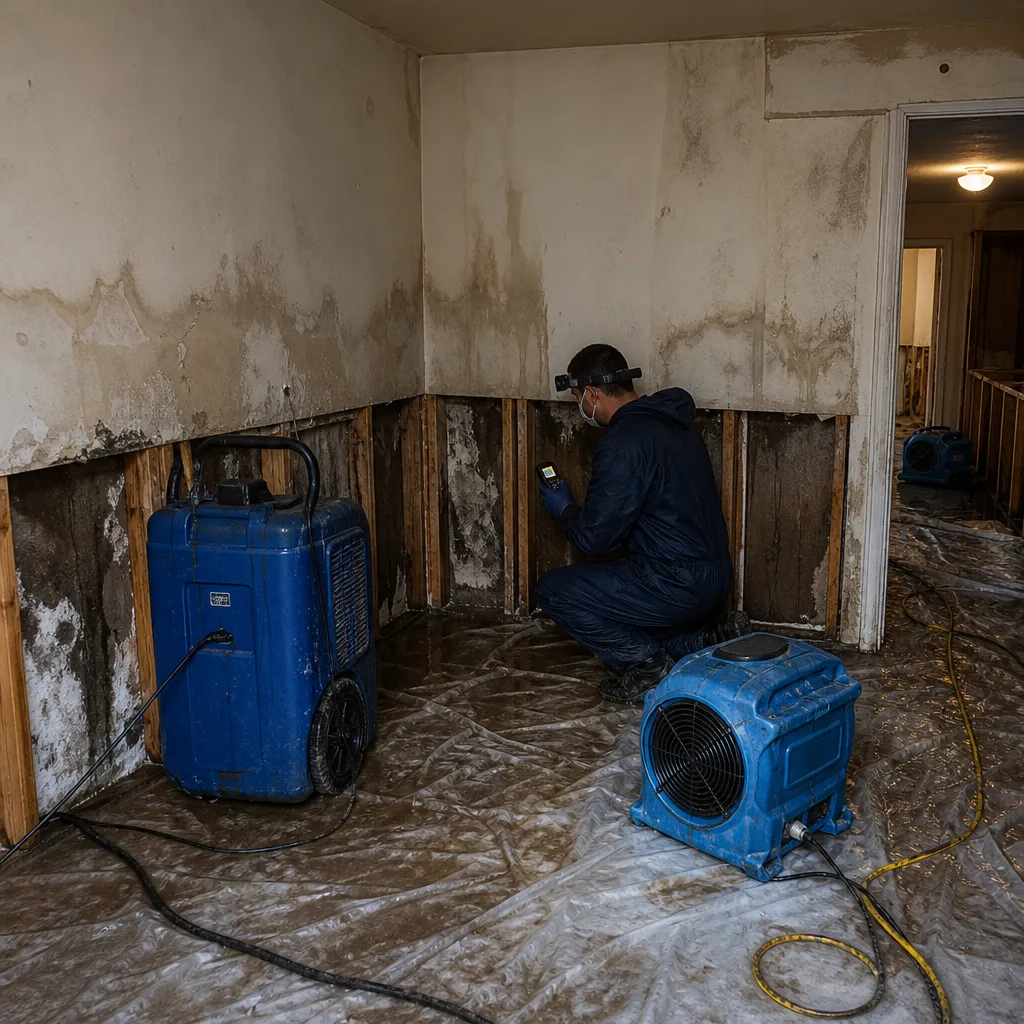 Before
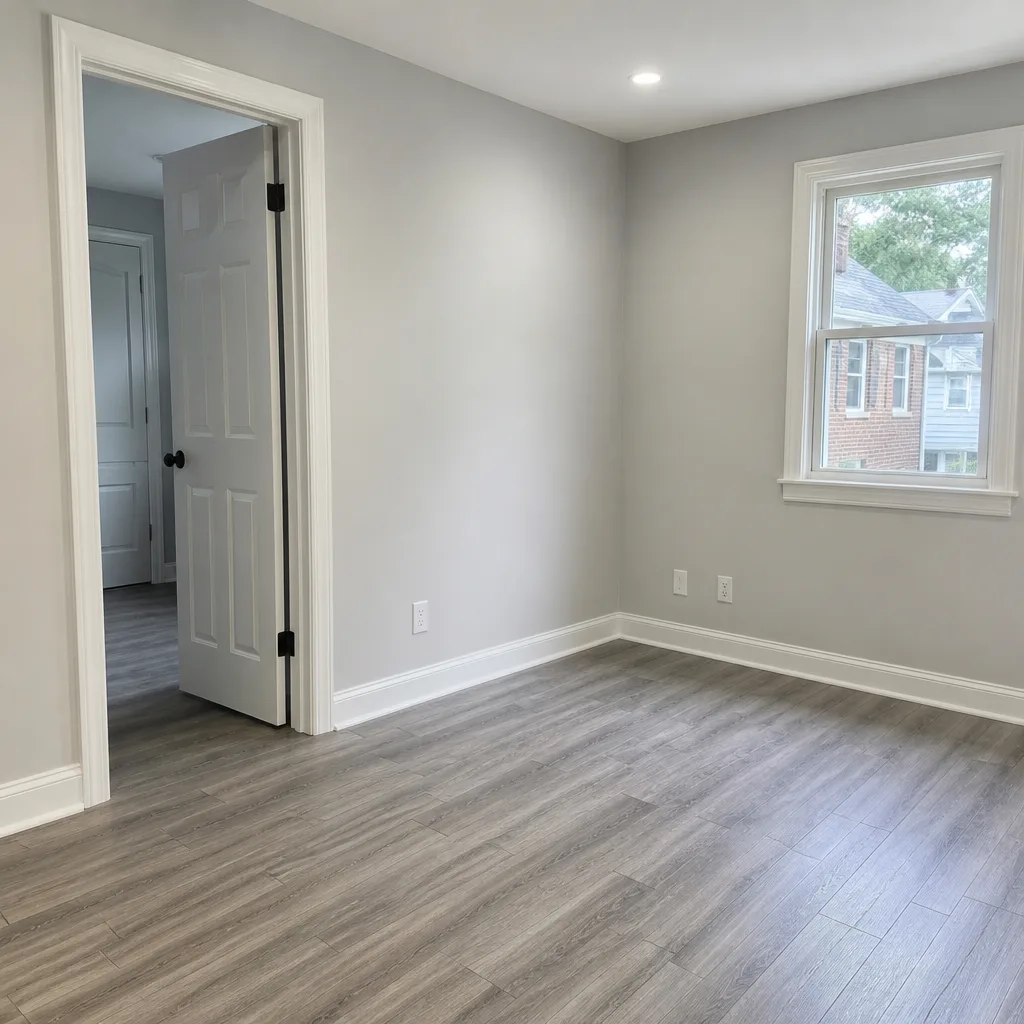 After
After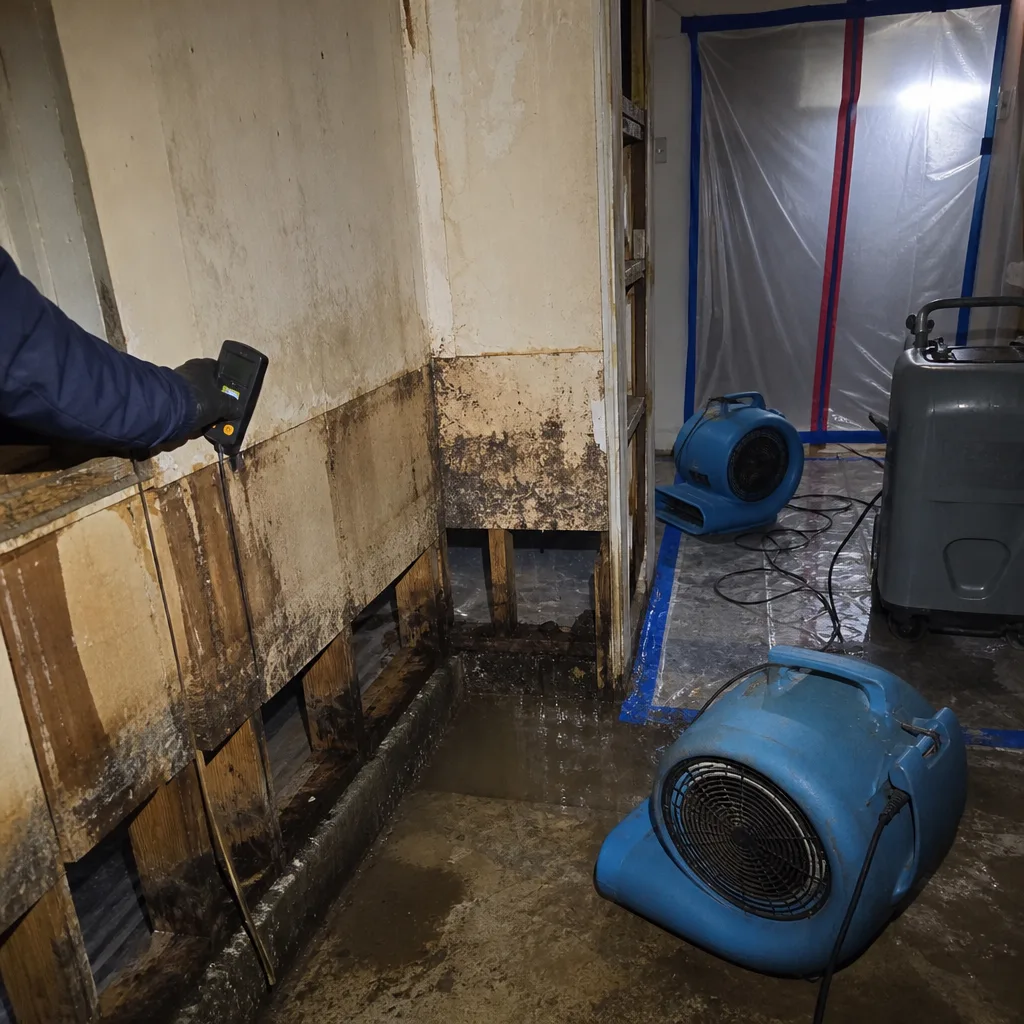 Before
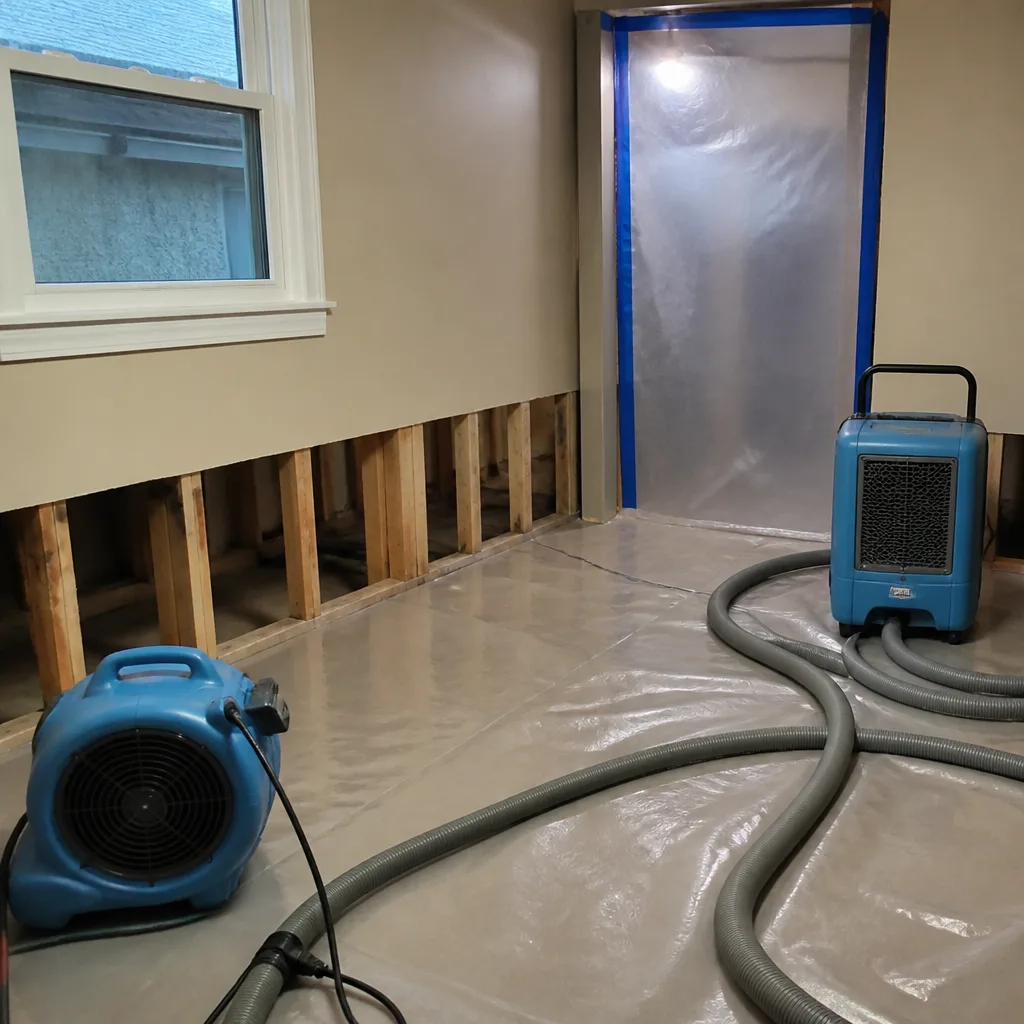 After
After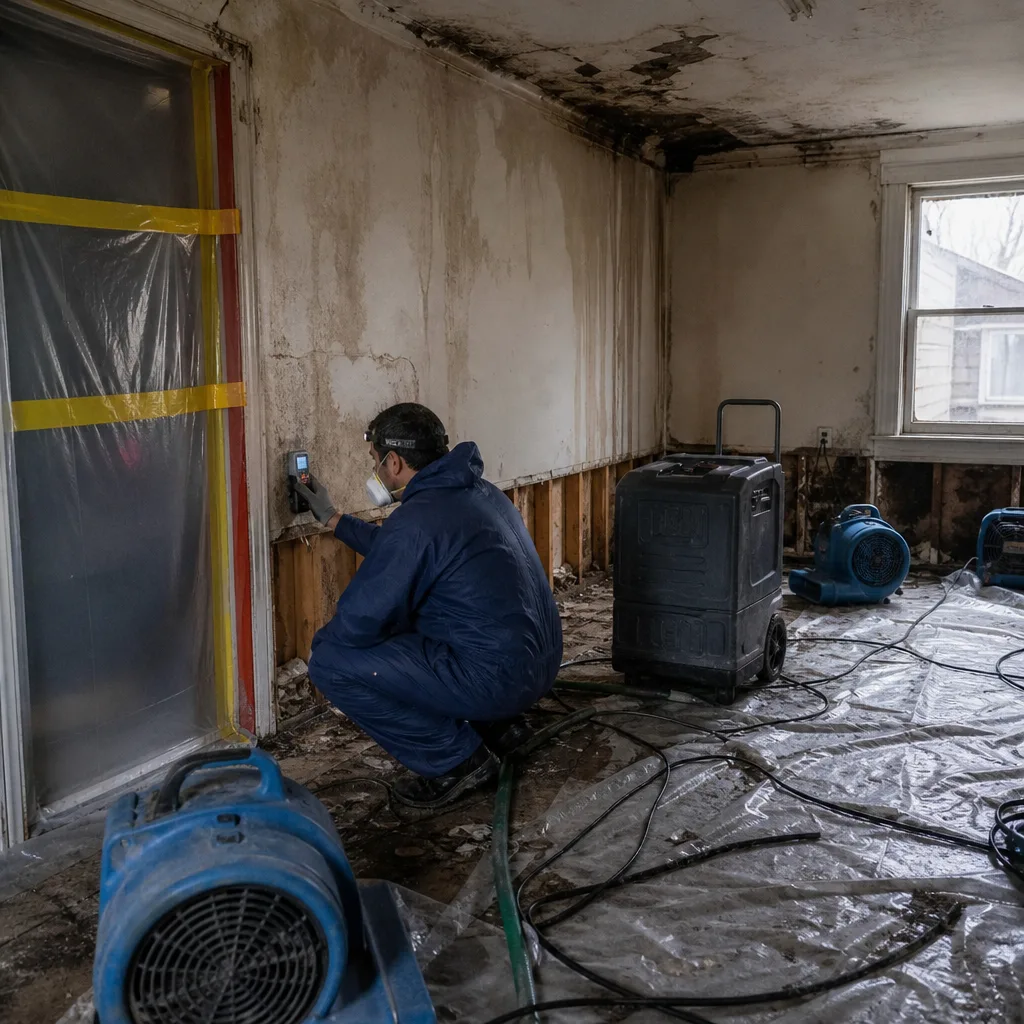 Before
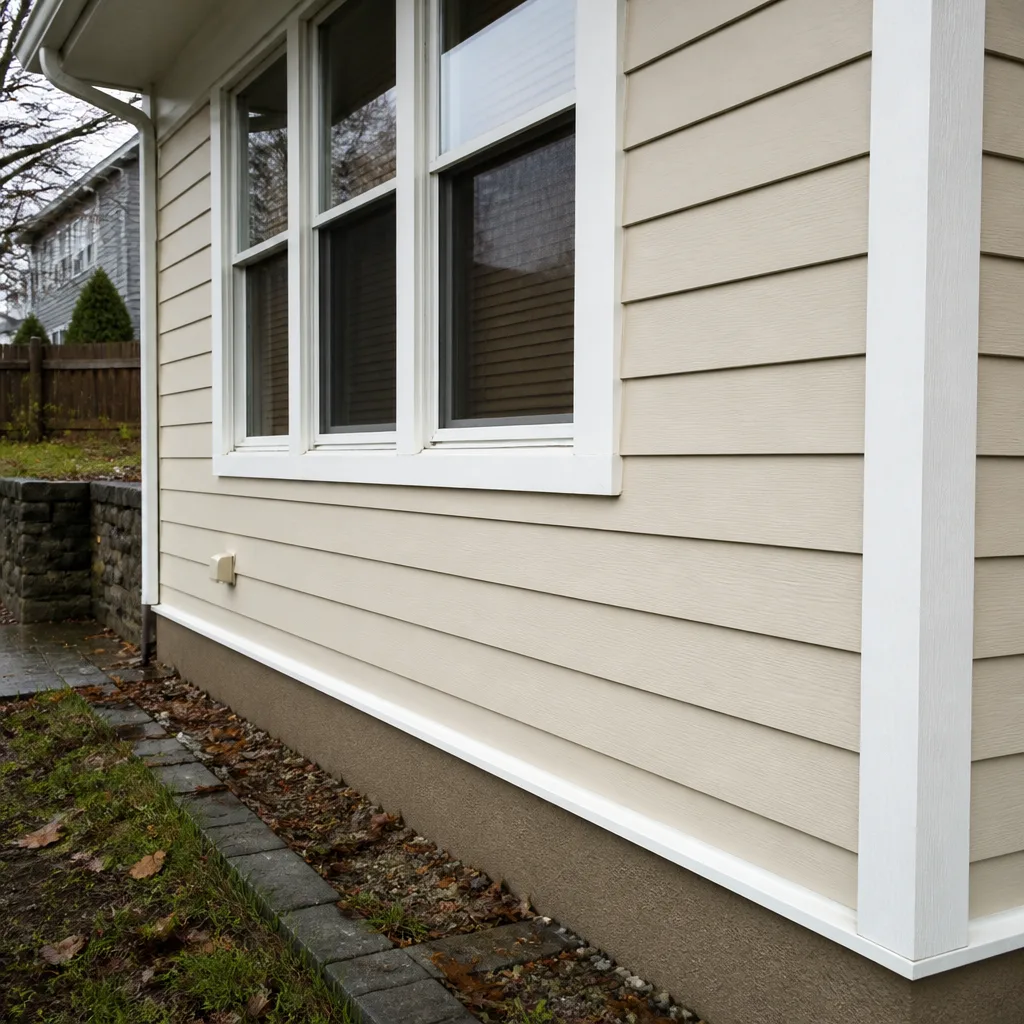 After
AfterWhen to Call a Professional
Sometimes the answer is obvious: standing water in your finished basement, a roof leak soaking through the second-floor ceiling, sewage backing up through a floor drain. Call immediately. Live water never stops causing damage just because you’re waiting to see what happens. Other times the signs are quieter: a musty smell that persists after cleaning, bubbling paint near the baseboards, warped flooring in a room with no obvious source. Those are also professional calls. Mold growth begins within 48-72 hours of a water event, and what starts as a small patch behind a baseboard becomes a remediation job if it’s not addressed. Marsh Water Damage Yonkers offers free estimates in Yonkers. Call (914) 233-3437 and a live person will answer, day or night, holidays included.
Frequently Asked Questions
Yes, and here’s the distinction that matters: New York has no restoration-specific license, but Westchester County requires a Home Improvement Contractor license for the kind of work restoration often involves, including demolition, drying equipment installation, and repairs. Ask for the HIC license number and verify it with the county. A contractor without one is operating illegally in Yonkers.
With a responsive local company, a crew should arrive within 60 to 90 minutes of your call in Yonkers, depending on traffic and time of day. A 24/7 live dispatcher is the difference between a crew that’s already rolling and one that calls you back when the office opens on Monday. At Marsh Water Damage Yonkers, a live person answers every call, 24 hours a day, and our techs work throughout Westchester, so response times are measured in minutes, not days.
Coverage depends entirely on the source of the water. Sudden and accidental events, such as a burst pipe or a storm-damaged roof, are typically covered. Gradual leaks, neglect, or flooding from an external source like the Saw Mill River or the Bronx River generally require a separate flood policy. A restoration contractor should work directly with your adjuster, provide photo documentation, and never pressure you to sign anything before your claim is reviewed.
Ask for a name and photo before anyone arrives, then check the photo badge at the door. This is exactly what the Threshold Verified protocol does for every Marsh Water Damage Yonkers job. Every technician is background-checked, identity-verified, and sent to you by name and photo before the visit. If your contractor can’t do that, you don’t know who’s in your home.
Most residential water extractions in Yonkers run between $800 and $1,800 before drying equipment is set, and structural drying typically adds $1,500 to $3,500 depending on the size of the affected area and the drying time required. A full basement flood restoration often lands between $4,000 and $12,000. If a quote falls far outside those ranges, ask for a written scope of work that explains the variance.
A contractor can and should coordinate with your adjuster, provide photo documentation, and submit detailed line-item estimates. What you should not do is sign away control of your claim. Avoid assignment-of-benefits forms that transfer your policy rights to the contractor. A reputable company works alongside you, not in place of you.
The Bottom Line
Hiring a damage restoration contractor in Yonkers comes down to four verifiable credentials, a written scope of work with a firm price, and knowing exactly who will walk through your door. None of these steps takes more than a few minutes, but together they eliminate the vast majority of the unqualified operators and predatory practices that plague this trade in New York. The state’s lack of a restoration-specific license puts the burden on you, the homeowner, to verify what other states verify automatically. Run the checks. Ask the questions. For a deeper dive, see The Complete Guide to Damage Restoration in Yonkers. And if you ever want a company that does all of this as a matter of routine, call (914) 233-3437. A live person answers. A named technician arrives. A written price is on the table before work begins.
Written by Tobias Reyner, Owner at Marsh Water Damage Yonkers, serving Yonkers since 2005.