
Last updated October 16, 2026
 Fire & smoke cleanup
 Mold remediation
 Storm response
 Sewage cleanup
 Reconstruction
Free visual inspection and a written scope of work before any mitigation begins - photos, moisture readings, and drying logs go in your claim file
The scope we write is the scope we bill. Anything new gets shown to you, in writing, before we touch it.
Get your free estimateThe Complete Guide to Damage Restoration in Yonkers
Most Yonkers homeowners don’t realize they’re managing a chain, not an event. A burst pipe leads to a water extraction crew, which leads to a drying company, which leads to a mold tester, which leads to a rebuild contractor. Each handoff is a seam where accountability leaks out and costs climb in. This guide maps the entire restoration chain from first drop to final coat of paint, written for Yonkers specifically: our older housing stock, our basement-heavy neighborhoods, our Hudson Valley humidity, and the city inspection requirements that most national guides never mention. For Damage Restoration Warning Signs: A Yonkers Homeowner’s Reference Guide, see our companion post. By the end, you’ll know exactly which questions to ask before you sign anything and which handoffs to refuse.
Quick Answer
Damage restoration in Yonkers is a five-step chain – extract, dry, test, remediate, rebuild – and the most expensive mistakes happen at the handoffs between steps. Most residential water extractions run between $1,200 and $3,800 before drying equipment is set, and full mold remediation with rebuild typically lands between $4,000 and $14,000 depending on square footage and materials. See our Damage Restoration Cost Breakdown: The Yonkers Homeowner’s Reference for 2026 for line-item detail. The single best protection is a written work order that names the licensed technician who will physically show up before any work begins.
Restoration work we handle
Table of Contents
- The Restoration Chain: Five Steps, One Owner
- Why Yonkers Homes Restore Differently Than the National Average
- What a Legitimate Written Work Order Looks Like
- Yonkers Permits and Inspection Requirements
- How Drying Actually Works: The Moisture Science You Should Understand
- What Damage Restoration Costs in Yonkers: A Line-Item Breakdown
- The One Question to Ask Before You Sign Anything
- Common Mistakes to Avoid
- When to Call a Professional
- Frequently Asked Questions
The Restoration Chain: Five Steps, One Owner
Restoration is not one service. It’s a sequence, and the sequence matters more than any individual step. Here’s how the chain runs, in order, with exactly who should own each link:
- Extract: Remove standing water and saturated materials. This is the first hour. A water extraction crew pulls water from carpets, pads, and hard surfaces using truck-mounted or portable extractors. In Yonkers basements – common in neighborhoods like Dunwoodie, Bryn Mawr, and Lincoln Park – extraction often means dealing with water that’s been sitting for hours or days before anyone noticed.
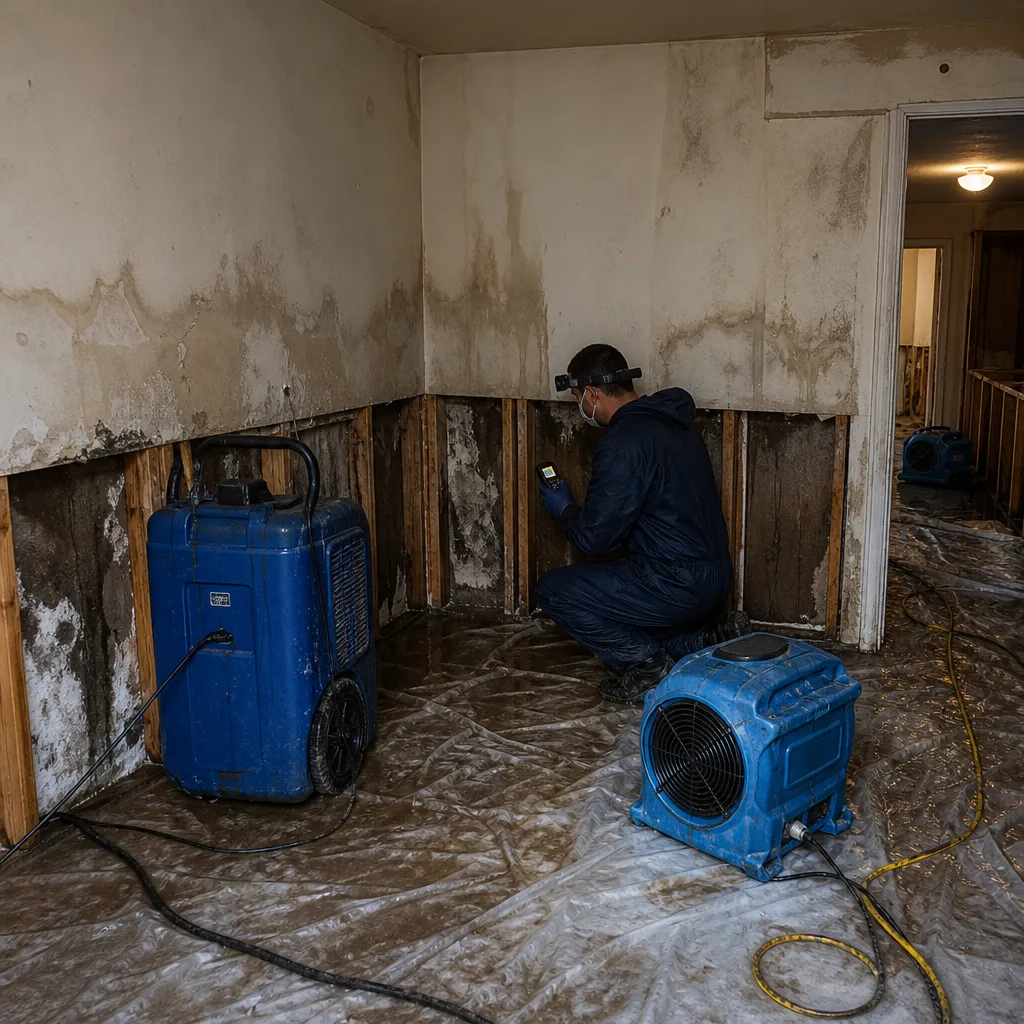
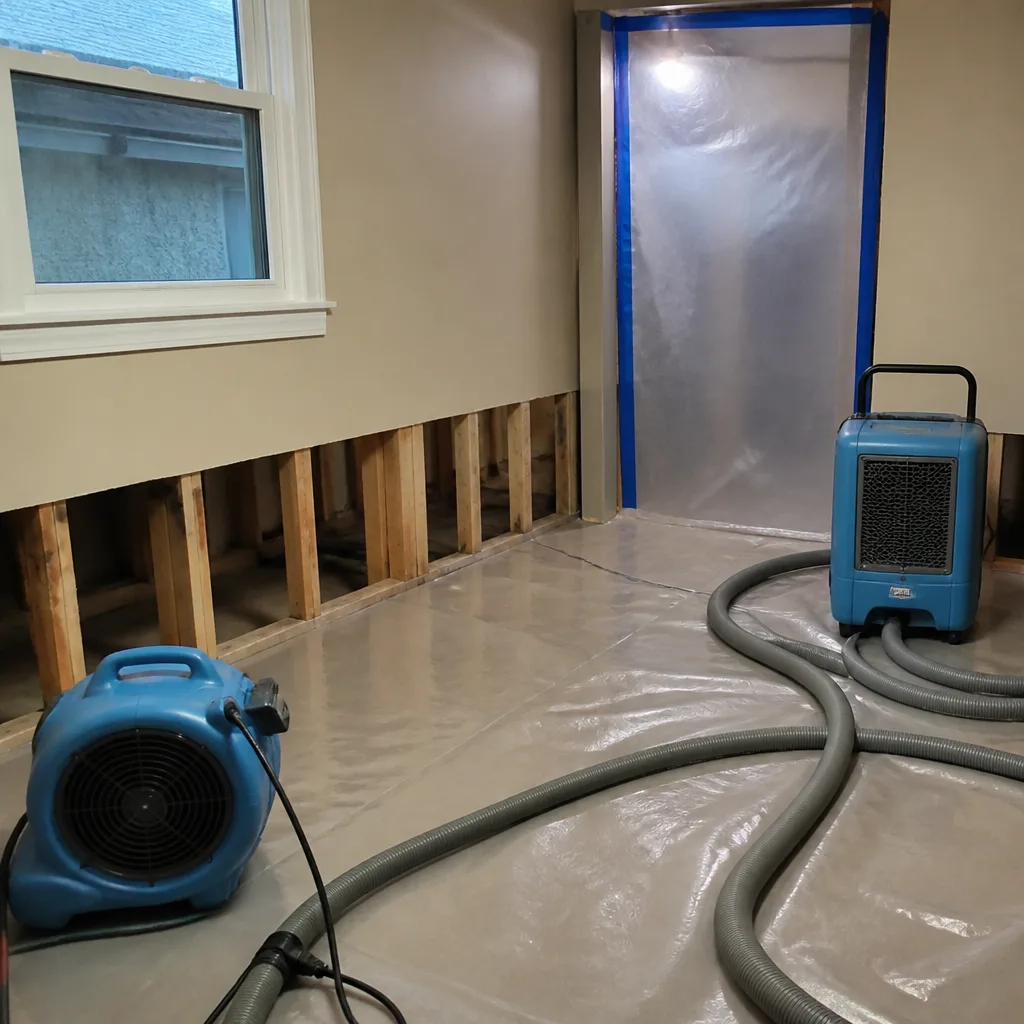
- Dry: Set up air movers and dehumidifiers to pull moisture from building materials. This is where psychrometric readings (measuring the moisture in the air and materials) come into play. Drying in Yonkers takes longer than the national average because our Hudson Valley humidity means the outside air itself is already saturated. Equipment from Dri-Eaz and Phoenix handles this efficiently, but it still takes what it takes. Rushing this step is the number one cause of recurring mold.
- Test: Use moisture meters and air samples to confirm the structure is actually dry, not just dry-looking. A wall can feel dry to the touch and still hold 18% moisture content inside the drywall. That’s a mold bloom waiting to happen. Post-remediation verification by a certified technician is not a formality – it’s the difference between a closed claim and a reopened one.
- Remediate: Remove and treat any microbial growth that developed before or during the drying process. This includes containment, HEPA filtration, antifungal treatment, and disposal of contaminated materials. In Yonkers, where many homes are pre-1960 with lath-and-plaster walls, remediation often means working around materials that hold water differently than modern drywall.
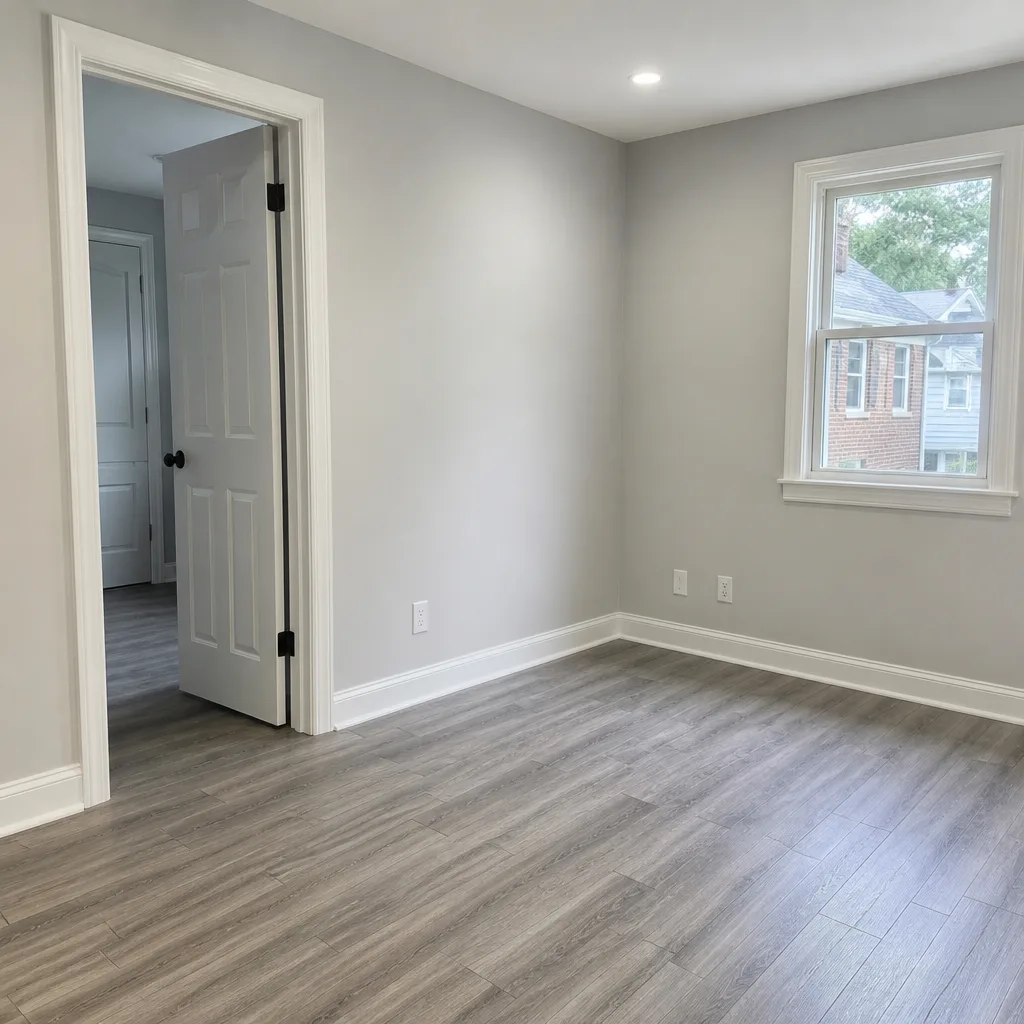
- Rebuild: Replace drywall, insulation, flooring, and trim. This is scoped, scheduled, and priced in writing like a remodel – never same-day, never rush. Rebuild in Yonkers is where the chain most often breaks, because the crew that dries is rarely the crew that builds.
Who should own each step? One company, from start to finish. When water damage restoration in Yonkers is handled by three different contractors, the drying company blames the extractor’s missed corner, the remediator blames the drying company’s short dry time, and the rebuild crew blames everyone. We’ve seen a $4,000 extraction-and-dry job become a $14,000 rebuild because the client hired the cheapest extractor on day one and got stuck in handoff purgatory for three weeks.
Why Yonkers Homes Restore Differently Than the National Average
National restoration timelines are built around a national average home: a slab-on-grade house in a dry climate with modern construction. Yonkers is none of those things. Here are the specific factors that change how restoration runs in our city:
- Basement-heavy housing stock: A substantial portion of Yonkers homes have full basements, many of them below grade on hillside lots. Water doesn’t just sit in a basement – it travels laterally through foundation walls, up through hydrostatic pressure, and into adjoining spaces. Extraction alone often doesn’t address the source.
- Aging construction materials: Pre-1940 homes in Yonkers often carry lath-and-plaster walls, original hardwoods, and dimensional lumber that drinks water differently than modern materials. Plaster holds moisture longer than drywall and hides moisture longer too. A national guide that says “dry time is 3-5 days” is talking about a modern drywall box, not a 1920s Colonial in Park Hill.
- Hudson Valley humidity: This is the quiet killer. Our average summer humidity hovers near 65-75%. When the air itself is wet, dehumidifiers work harder and longer. A drying job that takes 4 days in Phoenix might take 7 in Yonkers. That’s not incompetence – it’s physics. What it means for you: a company that quotes a fixed dry time before seeing the job is guessing.
- Local building code triggers: Yonkers has specific requirements around electrical work, structural alterations, and even some types of insulation replacement. If restoration touches load-bearing walls or requires rewiring after water exposure, you’ll need permits. More on this below.
- Hillside water runoff: Yonkers’ topography means many homes sit downhill from streets or neighbors. Storm damage restoration is often as much about redirecting surface water as it is about drying the interior. See our full guide on storm damage restoration in Yonkers for the specific runoff patterns we see in neighborhoods like Crestwood and Colonial Heights.
What a Legitimate Written Work Order Looks Like
A verbal estimate is a handshake. A written work order is a contract. In Westchester County, where restoration disputes can end up in small claims court, the difference matters. Here’s what a legitimate written work order includes – and what it never should:
A legitimate work order includes:
- The company’s full legal name, address, and license information.
- A scope of work that names each step: extraction quantities, drying equipment type and count, remediation method, rebuild materials and finishes.
- A line-item price for each step, not a single lump sum with no breakdown.
- A dry-standard commitment: what moisture reading will be considered “done” and who verifies it.
- The specific names of the technicians who will perform the work, with their credential types (IICRC, RIA, IFA).
- A written guarantee with a clear term and a clear remedy. Not “we stand behind our work” – a date and a process.
- Start and estimated completion dates, with a defined process for change orders if additional damage is found.
A verbal estimate that should worry you:
- “We’ll figure out the details once we’re in there.”
- “It’ll be around four or five thousand.” (Around? That’s a range, not a price.)
- “We’re pretty sure insurance will cover this.” (Pretty sure is not a coverage determination.)
- “You don’t need all that paperwork – we’re honest people.” (The paperwork is how you prove it later.)
At Marsh Water Damage Yonkers home base, every job receives a written price before any work begins. It’s stamped on the work order, not printed on a flyer. If additional damage is uncovered during demolition, you see the change order before the work proceeds – not after, with a new line item you never approved.
Yonkers Permits and Inspection Requirements
Not every restoration job in Yonkers requires a permit, but more do than homeowners realize. The line is generally structural versus non-structural:
Non-structural drying and remediation typically does not require a permit: setting up air movers and dehumidifiers, removing wet drywall, treating mold with antimicrobials, and hauling away damaged materials. This is restoration work, not construction, and Yonkers treats it accordingly.
Structural and systems work typically does require a permit: replacing load-bearing framing, altering electrical wiring that was water-exposed, replacing a water heater or boiler, or any rebuild that changes the layout. Yonkers also requires permits for certain types of insulation work if the sheathing is opened up.
The key moment is the transition from remediation to rebuild. The drying and mold removal can proceed without a permit. The moment a wall is rebuilt, a floor is replaced, or wiring is touched, the scope shifts into construction territory and Yonkers Building Department rules apply. A legitimate restoration company will tell you when that line is crossed – in writing – so you’re not surprised by an inspector showing up on a job you thought was just drying.
Ask your restoration company: “At what point does my job trigger a Yonkers permit, and who pulls it?” The answer tells you a lot about whether they understand local requirements or are applying a national playbook.
How Drying Actually Works: The Moisture Science You Should Understand
You don’t need a degree to understand drying, but you need to know enough to spot a shortcut. Here’s the plain-English version:
Water moves through building materials in three phases. Free water is the standing water you can see and mop up. Bound water is the moisture absorbed into drywall, wood, and plaster. Vapor is the water that has evaporated into the air. Extraction removes free water. Dehumidification and airflow remove bound water by converting it to vapor and venting it out. The science name for measuring this process is psychrometrics – measuring the moisture in the air and materials to know when the structure is genuinely dry, not just dry on the surface.
Here’s what that means for a Yonkers homeowner:
- Surface-dry is not dry. A wall can feel dry to your hand while the cavity inside still holds 20% moisture content. That hidden moisture is where mold grows, and it grows fast – within 48-72 hours in our summer humidity.
- Drying takes as long as it takes. The timeline depends on material type (plaster takes longer than drywall), humidity (Yonkers summers are brutal on dry times), airflow, and temperature. A company that promises “dry in 3 days” before seeing the job is selling you a schedule, not a result.
- Verification is a number, not a feeling. A legitimate dry-out ends with a moisture meter reading that meets a defined standard (typically below 16% for wood, below 12% for drywall). That number goes on your work order. If the company can’t tell you what number they’re shooting for, they’re not actually measuring.
We run Dri-Eaz dehumidifiers and XPOWER air movers on most Yonkers jobs – equipment designed to move large volumes of air across wet surfaces and pull vapor out of the air at a rate that matches our climate. The gear matters, but the operator matters more. A credentialed technician who understands Yonkers humidity patterns will set up equipment differently in August than in January.
What Damage Restoration Costs in Yonkers: A Line-Item Breakdown
Here are honest number ranges for the Yonkers market, based on the work we see week in and week out. These are not quotes – your job will vary based on square footage, materials, and damage extent – but they tell you what you’re walking into.
| Restoration Service | Typical Yonkers Range | What’s Included |
|---|---|---|
| Water extraction only | $400 – $1,200 | Standing water removal, carpet and pad extraction, initial assessment. No drying equipment. |
| Extraction + structural drying | $1,500 – $3,500 | Full extraction, air mover and dehumidifier setup, daily monitoring, moisture verification. 3-7 days typical in Yonkers. |
| Mold remediation (small area, under 10 sq ft) | $800 – $2,000 | Containment, HEPA filtration, antimicrobial treatment, disposal. |
| Mold remediation (full room or basement) | $3,000 – $8,000 | Containment, full material removal, treatment, post-remediation verification. |
| Full restoration with rebuild | $6,000 – $14,000+ | Everything above plus drywall replacement, insulation, flooring, trim, paint. |
The biggest variable is hidden damage. A flooded basement in a 1950s ranches-and-splits neighborhood like Grassy Sprain might look like a simple extraction, then reveal water that’s wicked up into wall cavities behind paneling. That’s why the written-price-before-work-starts model matters so much: you know the extraction price, you know the drying price, and if extra damage appears, you approve the additional scope before it’s done.
For a deeper dive on the mold side of this equation, see our full mold remediation in Yonkers guide, which breaks down containment protocols and verification standards specific to Yonkers housing stock.
The One Question to Ask Before You Sign Anything
Strip away the branding, the truck wraps, the website polish. Here’s the question that cuts through all of it:
“Who physically shows up on day one, and can I verify their identity before they enter?”
This question sounds simple. It’s not. Most restoration companies in Westchester County dispatch whoever is available that morning, and the homeowner gets a knock on the door from a person they’ve never seen, with no way to confirm that person works for the company they hired. That’s the second fear our customers carry – the first is the water, the second is the stranger.
The answer that protects you: “We’ll send you the technician’s name, photo, and a copy of their background check before they arrive. They’ll show photo ID at the door.” That’s the Threshold Verified standard, and it’s the only answer that actually addresses the second fear. At Marsh Water Damage Yonkers, every technician is background-checked, identity-verified, and sent to you by name and photo before the visit. Then they show a photo ID badge at the door. Every time. Not just first impressions.
Other questions worth asking, once that one is answered:
- “What specific moisture reading will you consider ‘dry,’ and will you put that number on my work order?”
- “If additional damage is found, am I approving that scope before it’s done or finding out after?”
- “What does your guarantee cover, for how long, and exactly what happens if something’s not right?”
- “Are your technicians credentialed through IICRC, RIA, or IFA, or are they trained in-house?”
Common Mistakes to Avoid
- Waiting a day to call. In Yonkers summer humidity, mold can begin in 48 hours. Every day of delay extends dry time and increases remediation scope. Call the moment you see standing water or smell must.
- Hiring the cheapest extractor and expecting them to handle drying, too. Extraction is a separate skill from psychrometric drying, and remediation is another skill still. One company, one chain, one written guarantee – not three separate vendors pointing fingers.
- Accepting a verbal estimate. In a Westchester County dispute, “he said around four thousand” is not a number a judge can enforce. A written line-item work order is.
- Assuming your homeowner’s insurance covers everything. Many Yonkers policies have exclusions for gradual water intrusion, sump pump failure without a rider, or mold without a specific endorsement. Get the scope documented and submitted before you assume coverage.
- Rushing the rebuild before the structure is verified dry. A wall that tests at 18% moisture content will look fine after a coat of paint – until the mold blooms three months later. Verification comes before rebuild, never after.
- Letting a contractor work in your home without identity verification. You wouldn’t let a stranger into your home for any other reason. Restoration should be no different. Ask for name and photo before the visit.
- Treating the restoration chain as a single event. It’s a sequence. The question is never “is this cost reasonable?” The question is “who owns the whole chain, and what happens at each handoff?”
When to Call a Professional
Call immediately if you see standing water covering more than a few square feet, if water has reached baseboards or wall cavities, if you smell a musty odor that appeared in the last week, or if a sump pump failed during a storm and water sat overnight. Call within 24 hours if you see water stains on ceilings, buckling floors, or peeling paint near windows or pipes. Call before you touch anything if the water source involves sewage, a broken supply line, or floodwater from outside – these are contaminated water situations that require professional equipment and protective gear, not DIY extraction.
Marsh Water Damage Yonkers offers free estimates in Yonkers – call (914) 233-3437 and a live person answers, 24 hours a day, including holidays. You’ll get a written price before any work begins and the name and photo of the technician before they knock.
Frequently Asked Questions
Full restoration with rebuild in Yonkers typically runs between $6,000 and $14,000, depending on square footage, materials, and whether mold remediation is required. Extraction alone runs $400 to $1,200, and extraction with structural drying typically lands between $1,500 and $3,500. Call (914) 233-3437 for a written estimate – it’s free and line-itemed before any work begins.
Extraction takes hours. Structural drying takes 3 to 7 days in Yonkers, longer than the national average because our Hudson Valley humidity slows evaporation and because older housing materials like plaster hold moisture longer than modern drywall. Rebuild takes 1 to 4 weeks depending on scope. Your work order should name a dry-standard moisture reading and an estimated completion date.
It depends on the source and your policy. Sudden events like a burst pipe are typically covered. Gradual intrusion, sump pump failure without a specific rider, and mold without an endorsement are often excluded or capped. Documentation matters: photo-documented assessments and a written scope of work are what adjusters actually respond to. We provide both on every job, and our team coordinates directly with your adjuster. Ask your agent, then get the scope documented in writing.
If the visible mold covers more than 10 square feet, if it’s on drywall or plaster, or if it’s in an area that was recently wet from a leak, yes – you need professional remediation. Visible mold often means hidden mold behind the surface, especially in Yonkers homes with lath-and-plaster walls that hold moisture in wall cavities. Surface cleaning without addressing the moisture source is cosmetic, not a fix.
Non-structural drying and mold remediation generally don’t require permits in Yonkers. Structural rebuild, electrical work, and certain insulation replacements do. The line is crossed when you move from tearing out damaged material to rebuilding. A legitimate restoration company will tell you the moment your job crosses that line, in writing, so there are no surprises when an inspector appears.
At Marsh Water Damage Yonkers, you receive the technician’s name, photo, and identity verification before the visit. The technician shows a photo ID badge at the door, every time. This is the Threshold Verified standard: background-checked, identity-verified, and confirmed before the knock. You never open your door to an unsigned, unverified stranger.
The Bottom Line
Damage restoration in Yonkers is a chain: extract, dry, test, remediate, rebuild. The chain is only as strong as its weakest handoff, and the handoffs are where money leaks and mold grows. You protect yourself by demanding a written work order with line-item pricing, a named dry standard, a written guarantee with a clear term, and the identity of the specific technician who will walk through your door. Those four documents turn an emergency into a managed process. Everything else is a handshake. In Westchester County, handshakes don’t hold up when the wall is wet. Browse more guides & resources for Yonkers homeowners.
Written by Tobias Reyner, Owner at Marsh Water Damage Yonkers, serving Yonkers since 2005.
See the difference
 Before
 After
After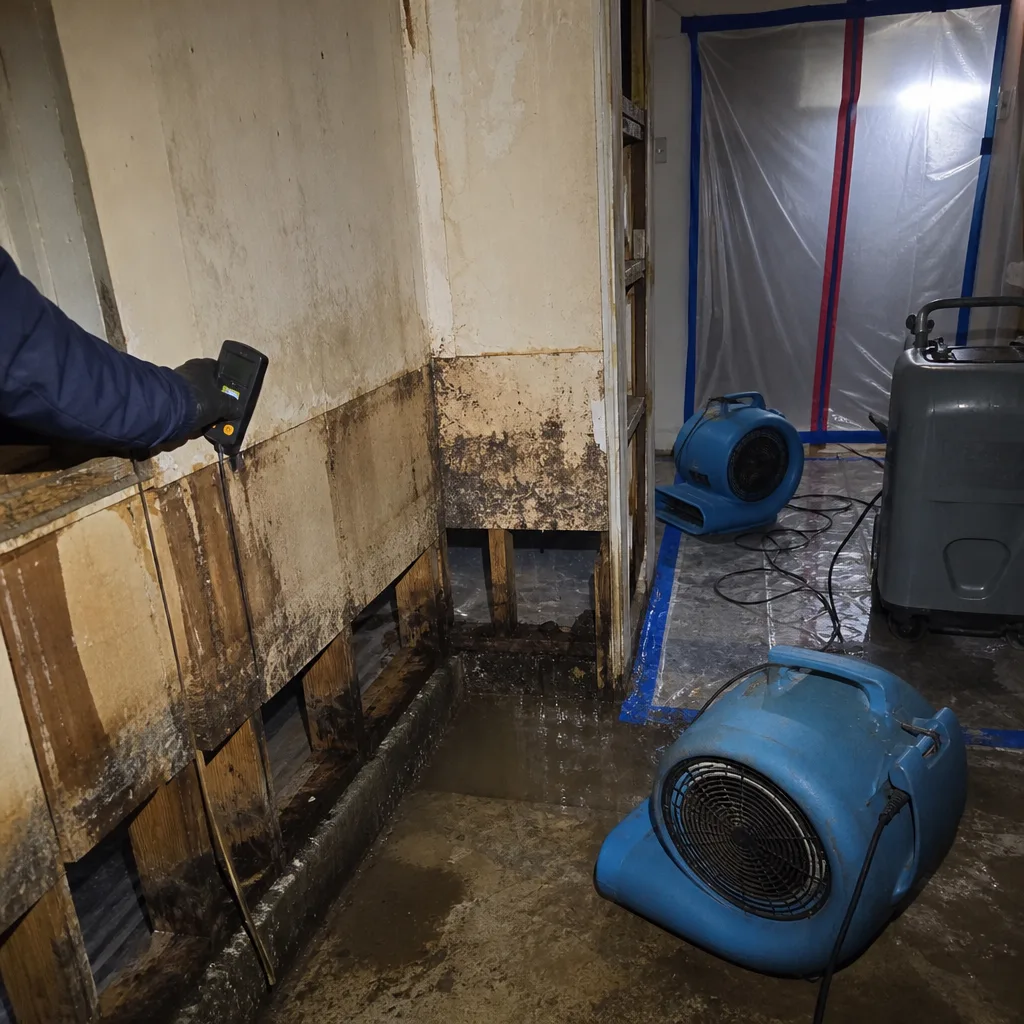 Before
 After
After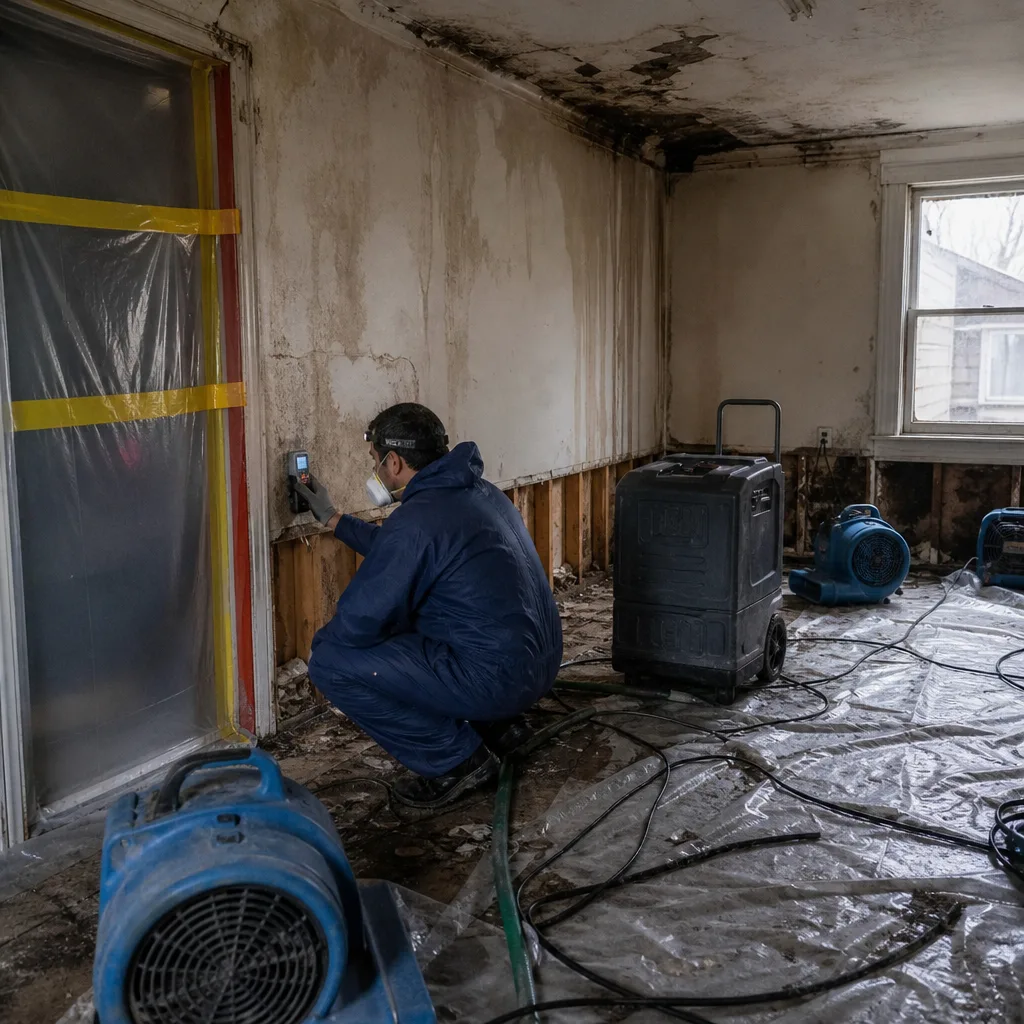 Before
 After
After