
 Storm response
 Fire & smoke cleanup
 Mold remediation
 Sewage cleanup
 Reconstruction
Free visual inspection and a written scope of work before any mitigation begins - photos, moisture readings, and drying logs go in your claim file
The scope we write is the scope we bill. Anything new gets shown to you, in writing, before we touch it.
Get your free estimateFast, Reliable Storm Damage Restoration Across Washington Heights
Storm damage in Washington Heights moves fast, especially in the taller pre-war buildings along Fort Washington Avenue and Broadway where wind gusts off the Hudson find every loose membrane and aging parapet. Most storm restoration calls in the neighborhood start with water where it shouldn’t be: a blown section of roofing, a failed window seal, or a steam riser that gave out when the pressure spiked during a cold snap. We respond to Washington Heights addresses the same day, and a live person answers when you call (914) 233-3437. No voicemail tree, no chatbot.
Our crews know the local building stock. We understand what happens when water enters a 1920s co-op and travels through plaster ceilings, hardwood floors, and original steam piping. That’s why our drying approach in Washington Heights always begins with moisture mapping, not fans in the hallway.
Key Takeaways:
- Wind-rated door and window reinforcement before storm season prevents most blow-in water damage on hillside buildings near the Hudson.
- Pre-war steam heat systems mean a single pipe failure can flood two, three, or four apartments below; we coordinate mitigation across units.
- Most Washington Heights storm restoration work runs between $2,800 and $9,500, depending on how many floors are affected.
- Every technician arrives with a photo ID badge and name sent to you before the visit. That’s the Threshold Verified standard, not a courtesy.
Why Marsh Water Damage Yonkers Is Washington Heights’s Preferred Storm Damage Restoration Company
Since 2005, our Storm Damage Restoration team has worked in Washington Heights buildings most contractors won’t touch without a fight: co-ops with board approvals, landmark-adjacent facades, and plaster that predates drywall by fifty years. Tobias Reyner, who leads our technical crews, has drilled our team on one rule for this neighborhood: dry the building without wrecking the original materials. Aggressive heat drying cracks plaster. Forced air aimed at hardwood pops boards. We map moisture first, then decide what the building can take.
Washington Heights homeowners call us for the same reasons the boards call us back. Our technicians carry IICRC, RIA, and IFA credentials. They run Dri-Eaz and Phoenix drying gear. They show a photo ID at the door, every time. And every job gets a written price before any equipment leaves the truck. We have not lost a co-op board’s trust in years, and we do not intend to start now.
Response time to Washington Heights is typically under 90 minutes for emergency storm calls, coordinated from our NYC metro dispatch. We will not promise a 60-minute guarantee because traffic on the Cross Bronx is what it is. But we will tell you exactly when the crew is leaving and who is on the truck.
Written by Tobias Reyner, Owner at Marsh Water Damage Yonkers. Tobias leads the technical team and personally reviews every Washington Heights storm loss for drying-plan accuracy.
Restoration work we handle
Storm Damage Contractors in Washington Heights
Storm damage contractors in Washington Heights do two jobs that most people blur together: stop the water and restore the damage. The first part is extraction and temporary protection. The second is taking the affected walls, floors, and mechanical systems back to pre-storm condition. A contractor quote for a typical one-unit roof leak in a Washington Heights co-op runs $1,800 to $3,400 for extraction, containment, and drying, plus another $1,000 to $2,600 for the repair scope if plaster and hardwood are involved.
Wind-Rated Door and Window Reinforcement
Before storm season, many Washington Heights boards ask us to assess exterior doors and windows on windward-facing floors. Hillside co-ops near the Hudson take sustained gusts that find weak seals. We reinforce door frames, replace worn weatherstripping and hinges, and check that windows in upper floors meet local wind-load expectations. This is prevention, not repair, but it is the difference between a dry hallway and a flooded one when the next noreaster hits.
Blow-In and Roof Edge Repair
Roof edge damage on these older buildings often starts small, at the coping or parapet flashing. Once wind gets under a membrane, water follows the path of least resistance through masonry and into the top floor apartments. Our Storm Damage Restoration contractors inspect the roof edge, seal the failure, and then trace the water path through the lower floors before setting any drying equipment.
Storm Damage Cleanup in Washington Heights
Storm damage cleanup in Washington Heights means more than mopping. In our experience, the water that enters these buildings rarely stays on one floor. Steam pipes run vertically in chases behind plaster. When a roof leak or burst riser lets water in, gravity does the rest. A cleanup estimate for a single apartment affected by water from above runs $1,200 to $2,400, including extraction, debris removal, and initial sanitization. When multiple floors are involved, the scope and price are written before work starts, in plain language, and the board sees the same document.
Water Extraction and Containment
We set containment on the affected floors first, to stop the damage from spreading through the building’s air system. Then we extract standing water with truck-mounted units and place drying equipment based on actual moisture readings, not assumptions. In pre-war buildings, this step has to be fast; original hardwood wicks water under baseboards and into neighboring rooms within hours.
Plaster and Hardwood Stabilization
Washington Heights plaster does not dry like drywall. It holds moisture deep and cracks when stressed. Our cleanup process includes stabilization decisions early: what can be dried in place, what needs controlled removal, and what has to be documented for insurance. Photo documentation is standard on every job, so your adjuster sees the condition before and after.
Trusted Brands We Service in Washington Heights
Most Washington Heights equipment closets and maintenance teams we work with stock parts from local suppliers for brands like Mitsubishi Electric split systems, Grundfos circulator pumps, and Weil-McLain boilers. We service all of them. Our crews carry compatible parts for the Dri-Eaz and Phoenix drying equipment we run, and we keep fast turnaround on service calls for buildings between 155th and 192nd Streets. If your building’s steam system has been patched for decades, call us before the next storm. We will find the weak point a generic contractor would miss.
See the difference
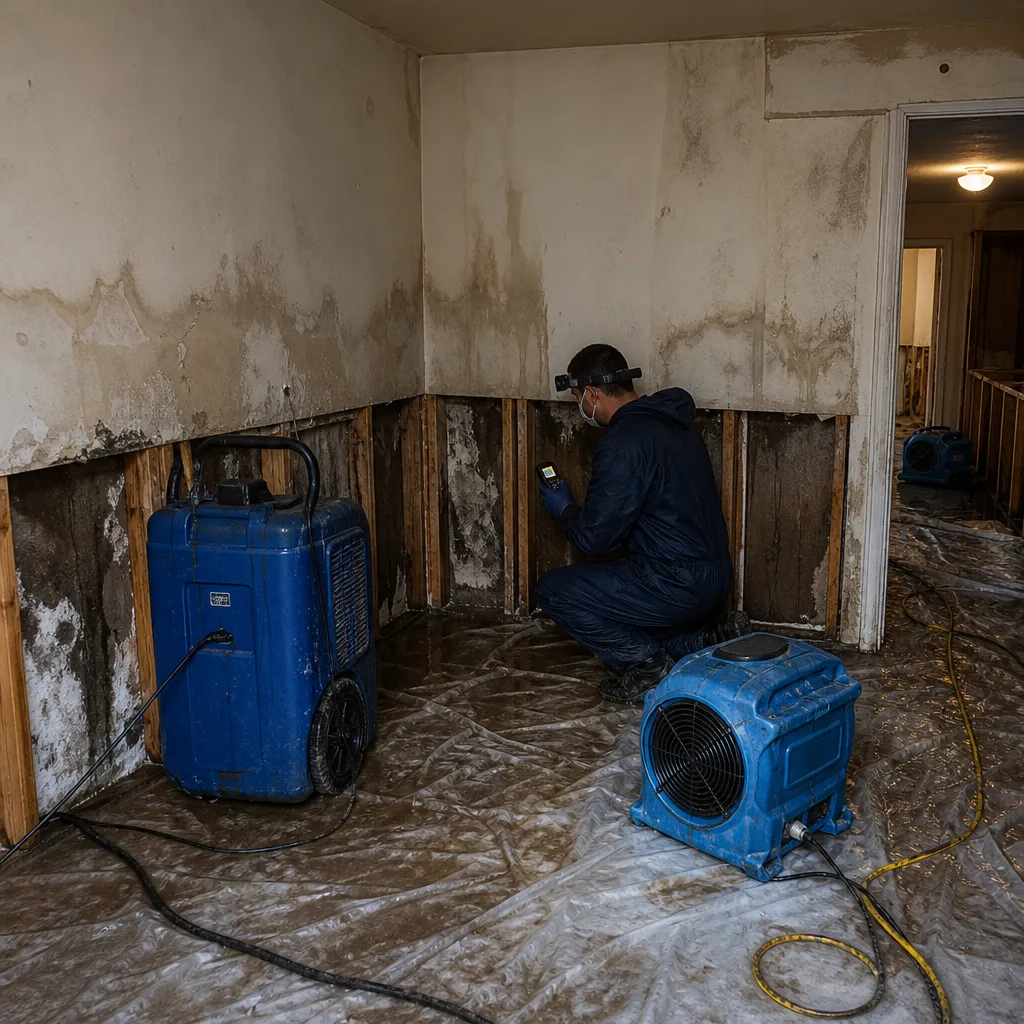 Before
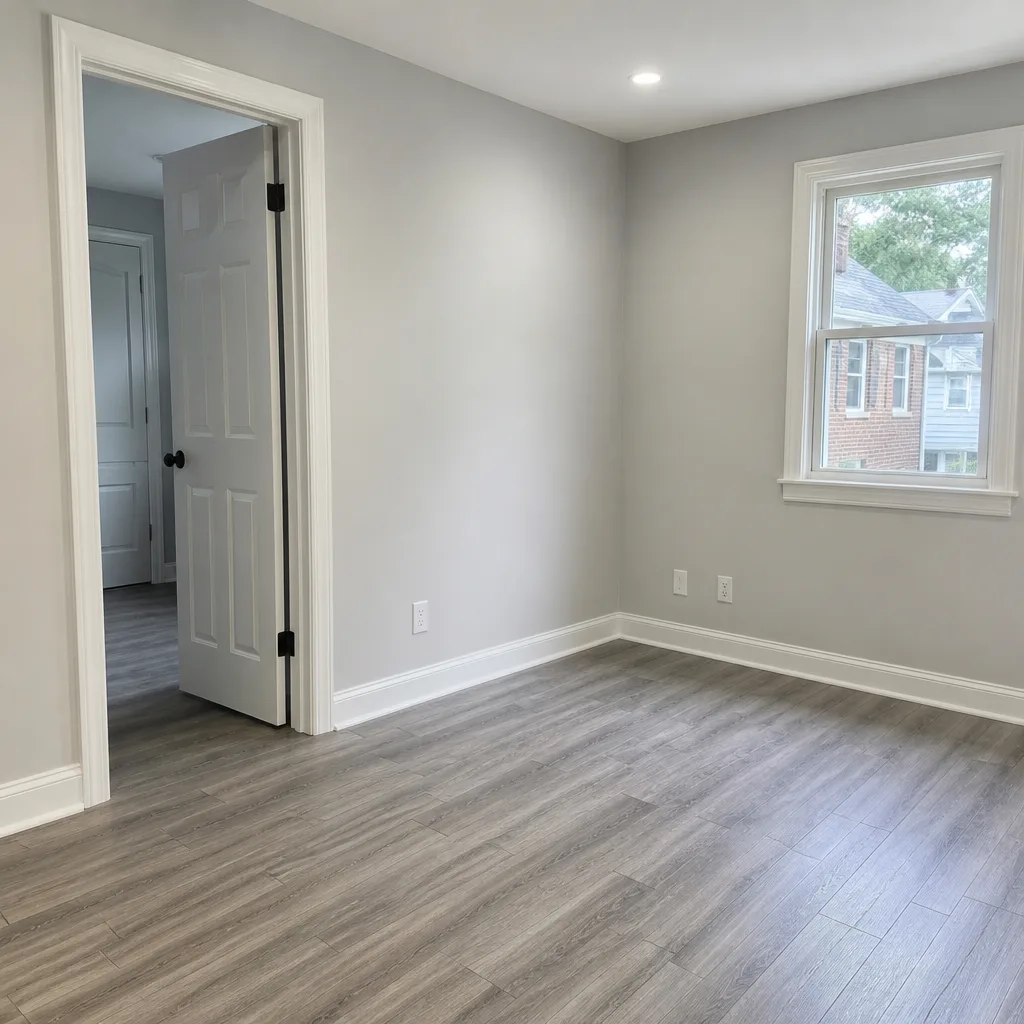 After
After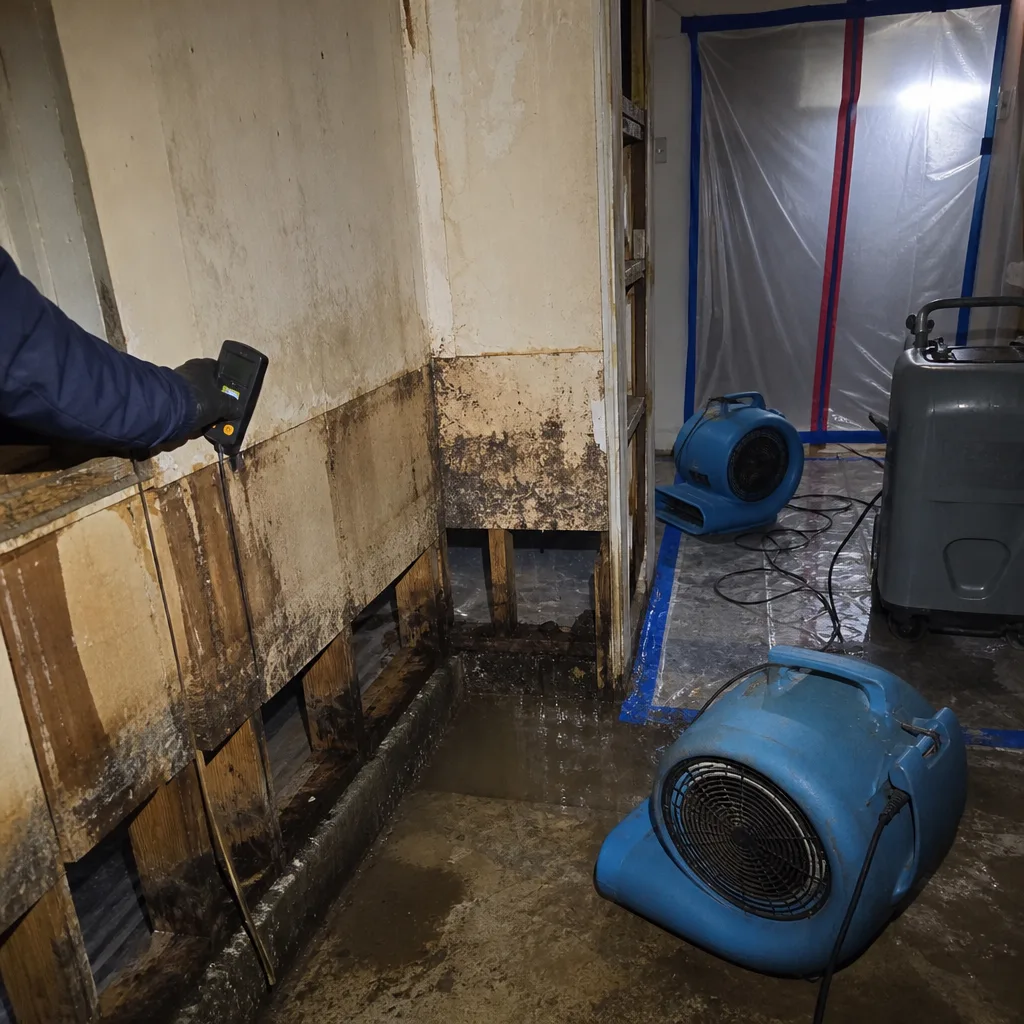 Before
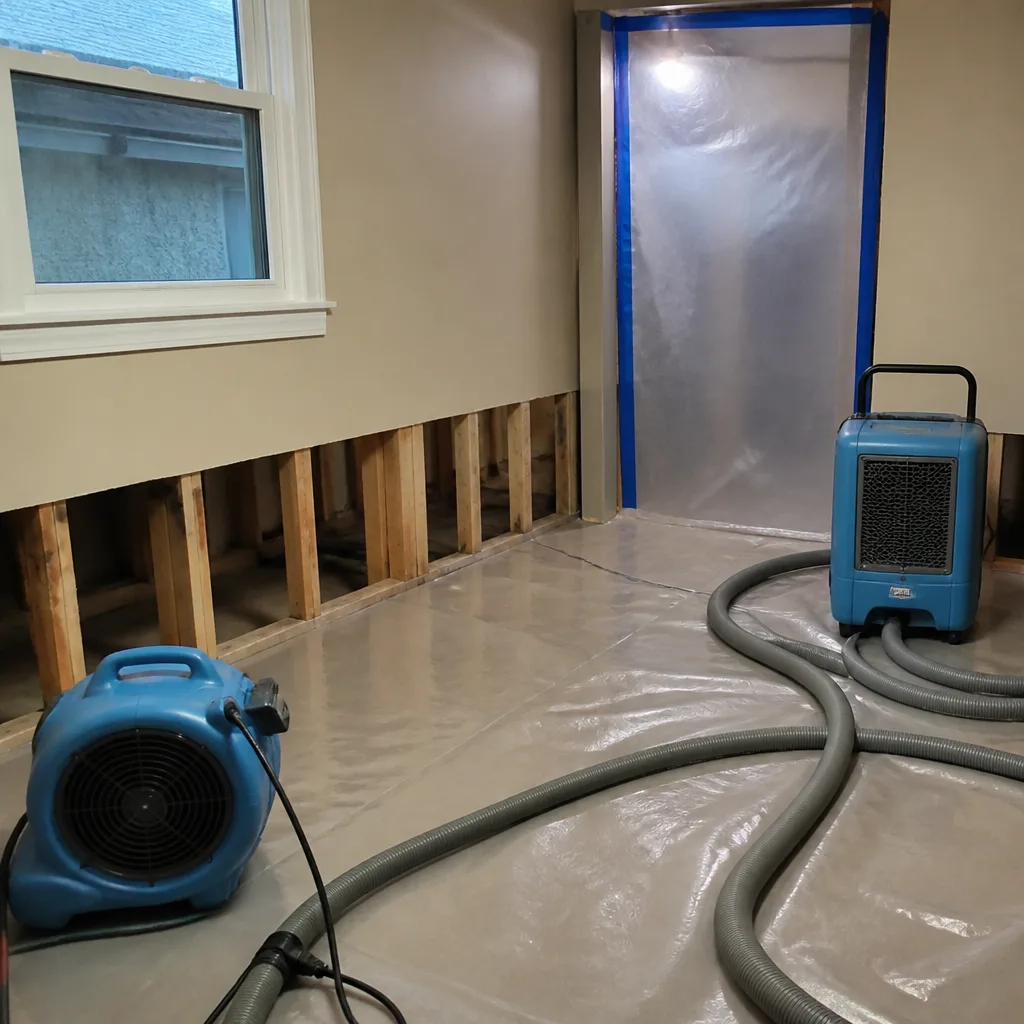 After
After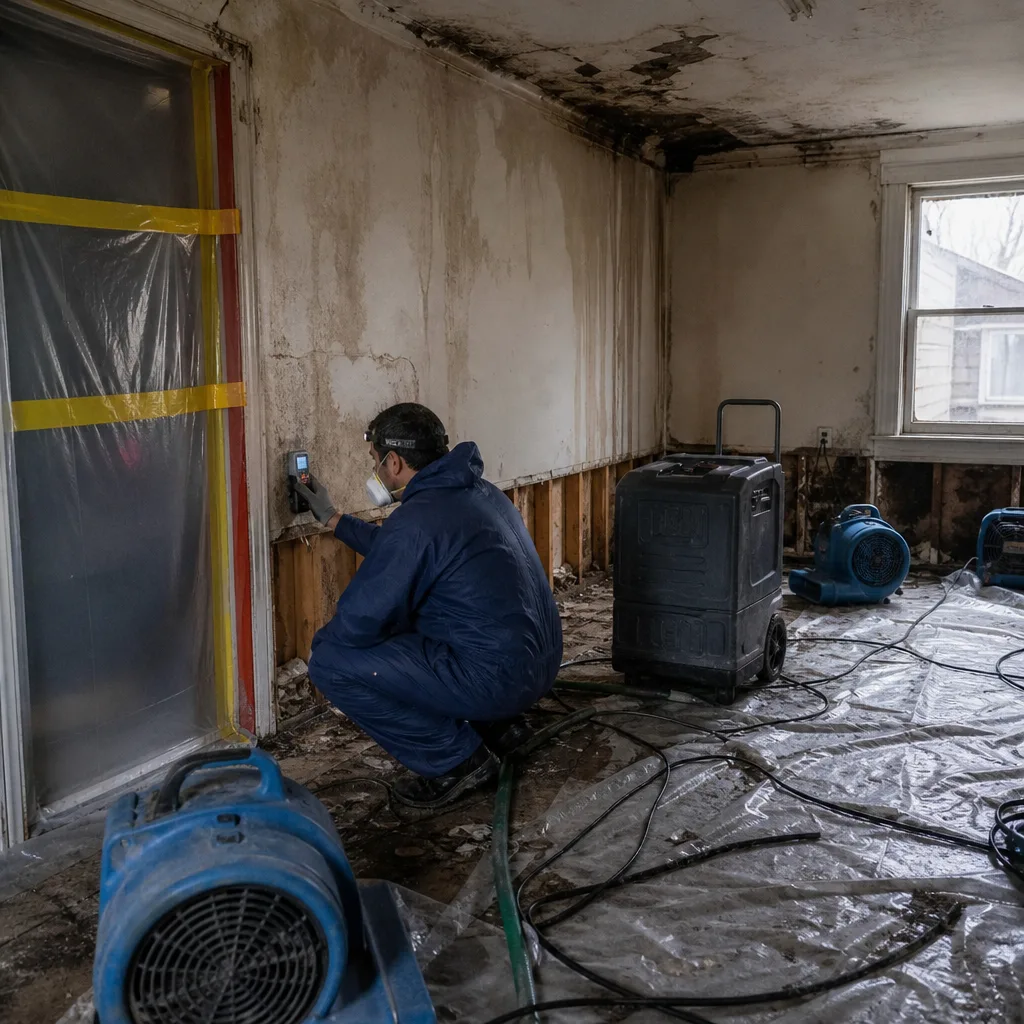 Before
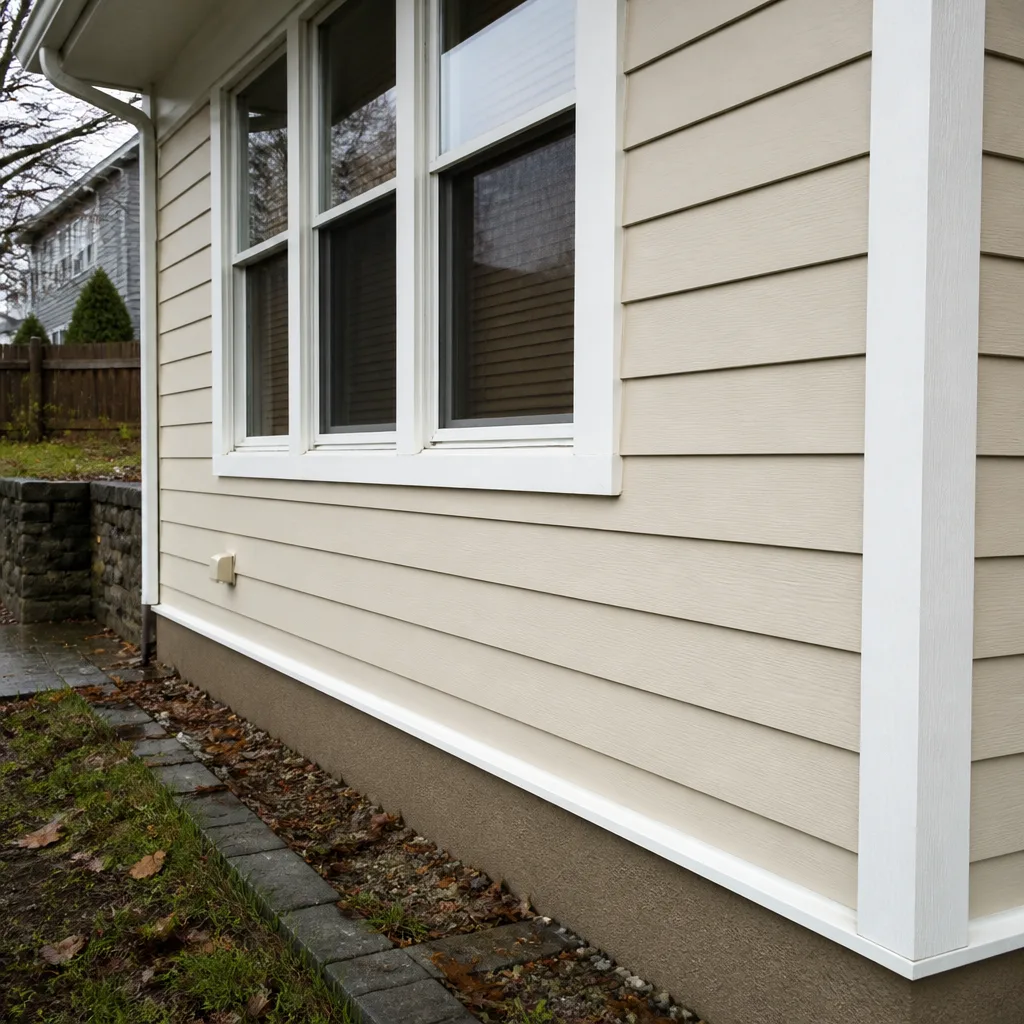 After
AfterCommon Storm Damage Restoration Problems We See in Washington Heights Homes
- Steam riser blowouts during cold snaps: Original steam piping in pre-war co-ops is often corroded at the couplings. When pressure spikes during a hard freeze, the riser lets go and floods units below. We see this most often in buildings where the risers run through exterior walls with minimal insulation.
- Roof edge and parapet failures on windward sides: Buildings on hillside streets get hit harder by Hudson wind than people realize. Once flashing lifts, water enters the top floor and travels through the building’s original plaster ceilings.
- Failed window seals and rotted sills on upper floors: Wood sills on 1920s buildings rot slowly from condensation, then fail entirely during a storm. Water enters the wall cavity and runs down to the unit below, often showing up as a stain on someone else’s ceiling first.
- Aggressive drying damage from prior restoration attempts: We regularly repair the aftermath of other companies’ work: cracked plaster from too much heat, warped hardwood from unmonitored air movement, and mold growth behind walls that never got a proper moisture check. Proper moisture mapping prevents these outcomes.
Pricing for Storm Damage Restoration in Washington Heights, NY
For a single apartment in Washington Heights affected by storm water from above, expect to pay between $2,800 and $9,500, depending on the number of floors involved and the condition of the original plaster and hardwood. A one-floor extraction with drying runs on the lower end. A multi-floor cascade in a steam-heated co-op, where water traveled through three units and into the ceiling of a fourth, runs higher. We give you a written price before any work starts. That price does not change after demo begins. Our free estimate includes a full moisture map of the affected area, so you know what we are actually dealing with. Call (914) 233-3437 to schedule.
We Also Serve Cities Near Washington Heights
From our New York City metro dispatch, we serve Washington Heights and the surrounding communities: Yonkers, City Island, Morningside Heights, and Eastchester. Each area has its own building quirks, but the standard is the same on every job: written pricing, photo-badged techs, and a 365-Day Done Right Promise printed on the work order, not hidden in fine print.
Serving Washington Heights, NY - Our Local Coverage Area
We’re based in the Washington Heights area and know this community well. Use the map below to see our service coverage - if you’re nearby, we can almost certainly help.
FAQs About Storm Damage Restoration in Washington Heights
Original steam heat systems affect storm restoration in Washington Heights because vertical risers and horizontal condensate lines run inside walls and floors built before insulation standards. When a storm leaks water into these chases, the moisture travels along the pipes to floors far from the original entry point. We map the full pipe path before drying anything, so we don’t miss a pocket of water two floors below where the roof failed. Call (914) 233-3437 for a moisture map of your affected unit.
Rapid extraction matters in Washington Heights co-ops because the original hardwood and plaster in these buildings absorb and transfer water quickly. Within hours, a ceiling leak can wick into floorboards and baseboards in adjacent rooms, and in a pre-war building, that moisture travels to the unit below through the same channels. The faster we extract, the less material has to be removed and the lower your final restoration cost.
Buildings on the hillside near the Hudson benefit from wind-rated door and window reinforcement on floors that face the river. That means checking that frames are anchored to the masonry, replacing worn seals and hinges, and verifying that upper-floor windows close tight against their sills. We do this assessment as part of a pre-storm walkthrough, and we give the board a written list of recommendations before the first storm hits. Estimates are free.
Moisture mapping uses specialized meters to measure moisture content at multiple depths inside plaster, wood, and masonry. In Washington Heights’ pre-war walls, we read the plaster surface, the lath behind it, and the studs or brick beneath that, because surface dryness means nothing when water is trapped deeper. The map tells us exactly where to set drying equipment and where to remove material first. It also documents the loss for insurance.
Storm damage restoration in Washington Heights typically requires a permit when structural removal, roof repair, or mechanical system replacement is involved. For co-ops, the board or managing agent coordinates the permit path. We prepare the required documentation and work with the board’s architect or engineer where needed. Simple water extraction and drying on the interior does not usually trigger a permit. We will tell you which applies to your job before we begin.
If storm water is inside your Washington Heights apartment right now, call (914) 233-3437. A live person answers. We’ll tell you who is coming, when they will arrive, and what the first hour will cost. Then we’ll hand you a written price before anything moves.
Written by Tobias Reyner, Owner at Marsh Water Damage Yonkers.