
Last updated October 16, 2026
 Fire & smoke cleanup
 Mold remediation
 Storm response
 Sewage cleanup
 Reconstruction
Free visual inspection and a written scope of work before any mitigation begins - photos, moisture readings, and drying logs go in your claim file
The scope we write is the scope we bill. Anything new gets shown to you, in writing, before we touch it.
Get your free estimateDamage Restoration Permits, Codes & Inspections in NY: What You Need to Know
A Yonkers homeowner sold their house in 2023, only to have the closing delayed three weeks when the title search revealed two unpermitted structural repairs made after a basement flood. They had paid a licensed contractor to do the work and assumed everything was handled correctly. It wasn’t. The buyer’s lender refused to release funds until the repairs were inspected, permitted retroactively, and signed off by the Yonkers Building Department. That delay cost the seller thousands in carrying costs and nearly killed the deal. This guide explains which restoration work triggers a permit in New York, how Yonkers handles emergency cases differently, and what you need to protect yourself before, during, and after a restoration project. For more guides & resources on protecting your home, see our full library.
Quick Answer
In New York, restoration work that replaces damaged materials “like for like” such as cutting out wet drywall and hanging new drywall in the same location generally does not require a permit because it falls under maintenance and repair. Work that changes the structure, moves walls, alters electrical or plumbing systems, or changes the footprint of a room crosses into “alteration” and requires a permit from the Yonkers Building Department. The safest rule: if the restoration changes what was there before in any structural or system way, assume you need a permit until the Building Department tells you otherwise.
Restoration work we handle
Table of Contents
- The Legal Line: Maintenance & Repair vs. Alteration in New York State Code
- How Yonkers Processes Emergency Restoration Permits: The 72-Hour Variance
- Which Water Damage Repairs Trigger a Permit in Yonkers
- Mold Remediation: When It’s a Cleaning and When It’s a Construction Project
- Certificate of Occupancy vs. Sign-Off: What Your Insurer and Lender Actually Need
- How Unpermitted Work Shows Up in Title Searches and What It Does to Your Sale
- FEMA Flood Zones in Yonkers and How They Intersect with Local Permit Rules
- The Contractor Agreement Language That Protects You
The Legal Line: Maintenance & Repair vs. Alteration in New York State Code
New York State Building Code draws a practical line between work that maintains a building and work that alters it. Understanding that line matters because it determines whether you need a permit, whether an inspection is required, and whether your insurance claim will proceed without complications. The distinction lives in the code’s definitions of “repair” and “alteration,” and it is not always obvious to a homeowner standing in a flooded basement.
Maintenance and repair means restoring a building component to its original condition using materials that match what was there before. If a pipe bursts and soaks your drywall, cutting out the damaged section and installing new drywall in the same footprint is repair. No permit. If the water warped a section of hardwood floor and you replace those boards with matching oak, that is repair. No permit. The code treats this work as keeping the building at its approved condition, not changing it.
Alteration means any change to the structure, mechanical systems, plumbing systems, electrical systems, or the intended use of a space. If you take that same basement flood as an opportunity to move a wall, add a bathroom, relocate a sump pump, or convert a crawl space into finished living area, you have crossed into alteration territory. Permit required. The Yonkers Building Department follows this state framework, and inspectors are familiar with every version of the “we were just restoring it” argument.
Here is where Westchester County homeowners get tripped up. In our experience working across Yonkers neighborhoods from Park Hill to Lincoln Park, the most common unpermitted alteration we encounter during restoration assessments is a previously finished basement that never had a permit. The homeowner assumes the restoration is simple because the space was already finished. The Building Department sees an alteration that was never approved and now has water damage. That opens a second conversation about the original work before the current restoration can proceed.
How Yonkers Processes Emergency Restoration Permits: The 72-Hour Variance
Yonkers Building Department recognizes that a burst pipe at 2 a.m. cannot wait for a permit office to open on Monday morning. New York State code allows for emergency work performed before a permit is issued when life, safety, or property preservation requires immediate action. Yonkers has a specific path for this called an emergency repair notice or emergency variance, and the clock starts the moment the work begins.
The process works like this, and it matters that homeowners understand the sequence before the emergency happens:
- Stop the source and secure the property immediately. Shut off the water, cut power to affected areas if water has reached outlets, and photograph everything. This work does not require a permit or notice because it is life-safety work.
- Notify the Yonkers Building Department within 72 hours. The city expects a written notice describing the emergency, the property address, the scope of the urgent work, and the contractor performing it. This notice can come from the homeowner or the restoration company, but it must happen. Missing the 72-hour window converts your emergency work into unpermitted work, and that is a much harder conversation.
- Document the emergency conditions before demolition. Photos of standing water, saturated drywall, and water migration paths are your protection if a question arises later about whether the work was truly emergency in nature.
- File the formal permit application as soon as practical. Yonkers does not waive permits for emergency work. It defers them. The restoration work that falls under alteration still needs a permit, but the city allows the emergency portion to proceed first so the structure is protected.
- Schedule the inspection once the permitted work is complete. The inspector verifies that the work matches the scope described in the emergency notice and the permit application.
One detail Yonkers homeowners often miss: the emergency variance applies to mitigation only. Tearing out wet drywall, removing soaked insulation, and setting drying equipment does not require a permit at all, emergency or otherwise. The permit conversation begins when you start putting the structure back together in a way that touches systems or structure.
We understand the instinct to handle everything quickly when water is spreading across a basement floor. If you’re dealing with a burst supply line or a backed-up sewer line in Yonkers, water damage restoration in Yonkers should start with mitigation, not paperwork. The paperwork follows, and a restoration company that knows the Yonkers process will handle the notice for you.
Which Water Damage Repairs Trigger a Permit in Yonkers
Most water damage restoration work falls on the no-permit side of the line, which surprises homeowners who assumed the opposite. What triggers a permit is not the presence of water but what the water makes you change. Here is how common water damage scenarios sort out in Yonkers:
No permit required:
- Removing wet drywall, baseboards, and flooring and replacing them with matching materials in the same locations
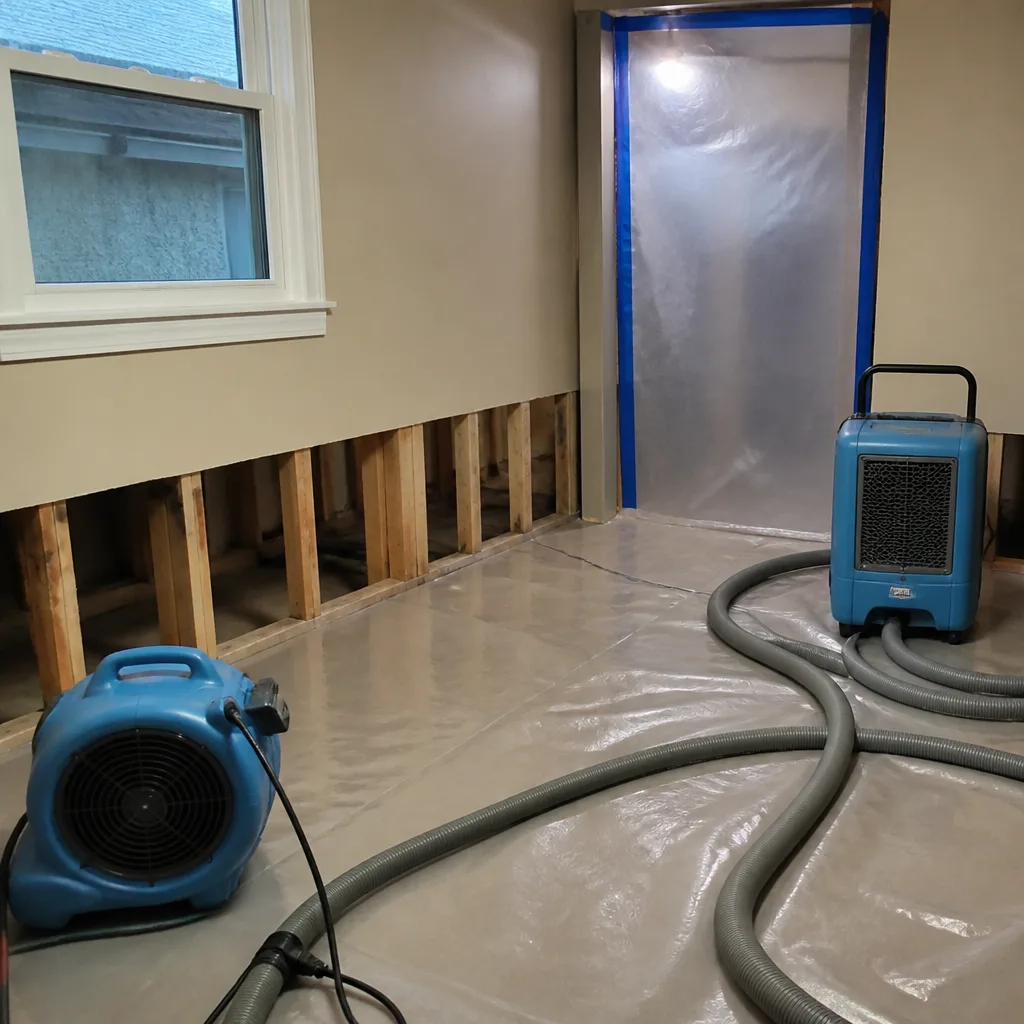
- Setting drying equipment, running dehumidifiers, and taking psychrometric readings (measuring the moisture in the air) to verify the structure is genuinely dry
- Replacing damaged insulation in the same wall cavities
- Painting and finishing surfaces back to their pre-loss condition
- Replacing a like-for-like sump pump or water heater with the same type and location
Permit required in Yonkers:
- Any change to structural framing, including sistering joists, replacing floor beams, or cutting into load-bearing walls
- Electrical work beyond replacing a damaged outlet, including new wiring, new circuits, or relocating panels
- Plumbing changes beyond direct replacement, including moving fixtures, adding drains, or changing pipe routing
- Converting unfinished space into finished living area even if you are “just rebuilding what water damaged”
- Replacing a fuel-burning appliance like a boiler or furnace if the replacement changes venting, fuel type, or location
The gray zone for Yonkers homeowners is structural drying. When floor joists in an older home near the Saw Mill River corridor get saturated, a restoration company may recommend removing the subfloor to dry the joist bays. Removing subfloor is demolition, not alteration, so no permit is needed. But if those joists are water-damaged enough that an engineer recommends reinforcement, the reinforcement work is structural alteration and requires a permit and likely an engineer’s letter.
Insurance claims get tangled here, too. Your insurer will pay for “restoration to pre-loss condition.” If the Yonkers Building Department requires the work to be brought up to current code during the rebuild, that gap between pre-loss condition and current code compliance is your financial responsibility unless you carry ordinance or law coverage. Most standard New York homeowners policies include some ordinance coverage, but the limits are often lower than what a 100-year-old Yonkers home needs to meet current code.
Mold Remediation: When It’s a Cleaning and When It’s a Construction Project
Mold remediation in New York occupies an odd legal space. New York State does not license mold remediators the way it licenses asbestos abatement contractors. Mold work is regulated under general contractor law, and permit requirements depend entirely on what physical changes the remediation requires. A mold job that is purely cleaning and treating surfaces with an EPA-registered antimicrobial typically needs no permit. A mold job that requires removing and replacing building materials is where the question gets specific, and the answer depends on whether the removal stays within the repair definition or crosses into alteration.
In our experience running mold remediation in Yonkers, the most common permit conversation happens with bathrooms and basements in pre-war homes. When mold behind a shower wall requires removing tile, backer board, and framing, and the framing has rot, the repair may require reframing a section of wall. If that wall is not load-bearing and the framing is replaced in kind, it is still repair. If the rot extends into a load-bearing partition or an exterior wall, the work becomes structural and the Building Department wants a permit and an inspection before the wall is closed up.
Here is the step-by-step we recommend for any Yonkers homeowner facing a mold situation that requires material removal:
- Get a scope written before any demolition. The remediation company should document what is being removed and what is being replaced, in writing, with material specifications.
- Determine if any removal touches structure or systems. If the scope says “replace rotted bottom plate” or “rewire affected circuit,” flag it for permit review.
- Call the Yonkers Building Department and ask. A five-minute call with a plan examiner saves weeks of delay later. Describe the scope honestly. The department wants the work done right, not blocked.
- Document the pre-existing condition. Before-and-after photos create a record that protects you if a question arises at sale.
- Verify the remediation passed clearance testing. Yonkers does not require third-party clearance for residential mold work as a matter of code, but your insurer may request it, and it is the only defensible proof the mold is gone.
One point we repeat often: mold growth behind walls is usually evidence of a water problem that was never fully solved. If you treat the mold without fixing the moisture source, you will be back in the same wall in eighteen months. That second remediation often costs more than the first because the mold has had time to reach deeper materials.
Certificate of Occupancy vs. Sign-Off: What Your Insurer and Lender Actually Need
After restoration work that involves permits, Yonkers issues one of two documents, and homeowners often confuse them. A Certificate of Occupancy (CO) certifies that a building or space meets code for its intended use and is legally safe to occupy. A sign-off or inspection approval closes out a specific permit and confirms the permitted work was completed to code. They are not the same thing, and which one you need depends on what happened in your house.
If your restoration was contained to repair work that did not change the building’s use, footprint, or occupancy classification, you need a permit sign-off, not a new CO. The Yonkers Building Department inspector reviews the work against the approved permit scope and signs the permit closed. Your file shows the work was completed legally, and that is usually sufficient for an insurer to release depreciation payments or for a future buyer’s lender to accept the property condition.
If your restoration involved converting space, adding a bedroom, or changing how a floor of your home functions, a CO may be required. In Yonkers, converting a one-family into a two-family or finishing a basement into habitable space with a bedroom and egress window changes the building’s occupancy and triggers CO requirements that go beyond the restoration permit.
Here is what actually happens with insurance claim payments, because this is where Yonkers homeowners get frustrated:
- Most insurers release the first portion of a claim payment (actual cash value) after the damage is verified, not after permits are closed
- The depreciation portion (recoverable amount) is often held until work is completed and documentation is submitted
- Some insurers request proof of permit closure before releasing the final depreciation payment, especially on structural claims over $10,000
- If the work required a permit and you skipped it, the insurer may classify the work as incomplete and withhold the recoverable portion entirely
The insurance angle is simple: your policy requires repairs to comply with local law. If they don’t, the carrier has grounds to reduce or deny portions of the claim. That is not a customer service issue; it is a contract condition. Getting the permit done protects the claim.
How Unpermitted Work Shows Up in Title Searches and What It Does to Your Sale
The 2023 Yonkers sale we mentioned at the top of this guide is not an outlier. Title companies in Westchester County have become far more aggressive about flagging building department records during title searches, and unpermitted restoration work is one of the most common findings. When it appears, the sale stalls, and the seller is the one who pays.
A title search pulls more than deeds and liens. In Yonkers, title examiners request the building department file for the property, which includes every permit application, every inspection record, every open permit, and every violation ever filed against the parcel. If a permit was pulled for a restoration project and never closed, that open permit shows up. If work was done that should have required a permit and no permit appears, that gap can also raise questions when a buyer’s inspector notices recent structural work during a physical inspection.
The fix is rarely quick. Here is the sequence for a Yonkers homeowner who discovers unpermitted work before an attempted sale:
- Gather everything you know about the work. Contractor name, dates, scope, receipts, photos from the job, and any correspondence. This establishes what was done and when.
- Contact the Yonkers Building Department and explain the situation. You are not the first person in this position. The department has a path for retroactive permits, though it may require opening walls to expose the work for inspection.
- Be prepared for the inspection to find code violations. Work done without a permit is often work done wrong. The framing may not meet current standards. The electrical may not have proper clearances. Fix these before the inspection if possible.
- Pay the permit fees, including any late or penalty fees Yonkers assesses for after-the-fact permits. These are usually modest compared to the cost of a failed closing.
- Get the retroactive permit closed and the file updated. This is the document your buyer’s lender needs.
The seller in that 2023 case lost three weeks, paid approximately $4,800 in additional carrying costs, and conceded $7,500 at closing to keep the deal alive after the buyer’s attorney used the permit issue as leverage. Protecting yourself before the work starts costs a fraction of that.
This is also why the contractor’s permit language in your agreement matters. A restoration company that says “we handle everything” but does not put permit responsibility in writing is not actually handling anything. The legal responsibility for permits on your property rests with the property owner, always. You can contractually require the contractor to obtain them, but if they do not, the title search will find you, not the contractor.
FEMA Flood Zones in Yonkers and How They Intersect with Local Permit Rules
Yonkers sits between the Hudson River on the west and the Saw Mill River winding through the eastern neighborhoods, and FEMA flood maps tell a more complicated story than most homeowners expect. Neighborhoods like Ludlow, Nepera Park, and sections of downtown near the Saw Mill corridor carry flood zone designations that significantly affect restoration permits and what you are allowed to rebuild.
FEMA flood zones intersect with Yonkers permit requirements in three ways that most restoration guides never cover:
Substantial damage rules are the big one. Under FEMA rules and Yonkers’ local floodplain ordinance, if a structure in a Special Flood Hazard Area (an A or AE zone) sustains damage exceeding 50% of its market value, it is classified as “substantially damaged.” Once that classification happens, the property cannot simply be restored to its pre-loss condition. It must be brought into full compliance with current floodplain regulations, which often means elevating the structure, floodproofing the lower level, or both. A basement flood in a Ludlow home built close to Saw Mill River elevation can trigger this threshold faster than homeowners realize because the market value of the home may be modest while the repair costs are fixed and real.
Permit scope changes when flood zones are involved. Work that would be simple repair in a non-flood-zone parcel in Park Hill becomes more complicated when the same work happens in a mapped floodplain. Yonkers Building Department reviews floodplain parcels with a different checklist, and some repairs that would normally skip permitting, such as replacing a furnace or water heater, may require a floodplain development permit if the equipment is being relocated or the work triggers FEMA’s cumulative improvement rules.
Your insurer’s obligation changes based on flood zone. Standard homeowners insurance excludes flood damage entirely. If you have a separate flood policy through NFIP or a private carrier, the claim process requires damage documentation that ties directly to the permitting conversation. NFIP claims include increased cost of compliance coverage (up to $30,000) specifically to pay for elevation or floodproofing when substantial damage is declared. That coverage only kicks in when the local building official makes the substantial damage determination through the permit process.
If your Yonkers home is in or near a flood zone, check your flood map before starting any restoration. The FEMA Flood Map Service Center shows current designations, and Yonkers maintains local floodplain information through the Building Department. A restoration company that knows these intersections will flag them before work starts, not after the inspector arrives.
The Contractor Agreement Language That Protects You
Every restoration agreement in New York should include specific language about permits, and most of the agreements homeowners sign do not. The absence of that language is not an oversight; it is a liability transfer. Here is what a protective agreement includes, and what to look for before you sign anything after a water, mold, or storm event.
The contractor agreement should state, in writing:
- Who is responsible for determining whether the work requires a permit under Yonkers Building Department rules
- Who is responsible for obtaining permits and paying permit fees
- The contractor’s obligation to provide you with copies of all permit applications, approvals, and inspection results
- A statement that work will not begin until any required permits are issued, except for emergency mitigation work allowed under the 72-hour variance
- A warranty that all work performed will comply with applicable New York State and Yonkers codes
- What happens if a permit required after-the-fact: who pays the fees, who opens the walls, and who handles the Building Department communication
The most protective agreements in New York also include a clause stating that final payment is not due until all permits are approved and closed with the Yonkers Building Department. That single sentence gives you leverage that no amount of verbal assurance can provide.
This is where the difference between a responsible restoration company and a fast one becomes obvious. A company that understands Yonkers process will include permit responsibility in the scope before work starts. We put a written price before any work begins, and that written scope includes permit determination and management. The permit fee itself is a pass-through cost, but the responsibility is clearly assigned. If you are comparing restoration bids in Yonkers and one contractor discusses permits and one does not, the one who discusses them is the one who has done this before. Our DIY vs Professional Damage Restoration: The Yonkers Homeowner’s Decision Guide can help you evaluate who to trust.
Common Mistakes to Avoid
- Assuming the contractor pulled permits when they did not. Yonkers homeowners often discover at selling time that a restoration contractor never filed for a permit that was clearly required. Ask for permit copies before final payment, not after.
- Treating emergency mitigation and permitted restoration as the same step. Emergency water removal and drying need no permit. Reconstruction that follows often does. Keeping them separate in your mind prevents surprises.
- Hiding work from the Building Department to avoid fees. Yonkers permit fees for residential restoration work are modest, often a few hundred dollars for work under $10,000. The after-the-fact permit costs more, and the title problem at sale costs thousands.
- Assuming flood zones only matter for flood insurance. Located near the Saw Mill or Hudson corridors, your property’s flood zone affects what you can rebuild and how, even if the damage came from a plumbing leak, not a flood.
- Signing a restoration agreement with no permit language at all. An agreement silent on permits is an agreement that leaves the legal responsibility with you while allowing the contractor to control the work. That is the worst combination.
- Paying the full restoration invoice before permit closure. Once paid in full, your leverage to get permits closed evaporates. Tie final payment to permit sign-off in the agreement.
- Letting an insurance deadline force you to skip the permit process. Some insurers set deadlines for documenting completed repairs. A permit is your documentation. The slight delay is worth the protection.
See the difference
 Before
 After
After Before
 After
After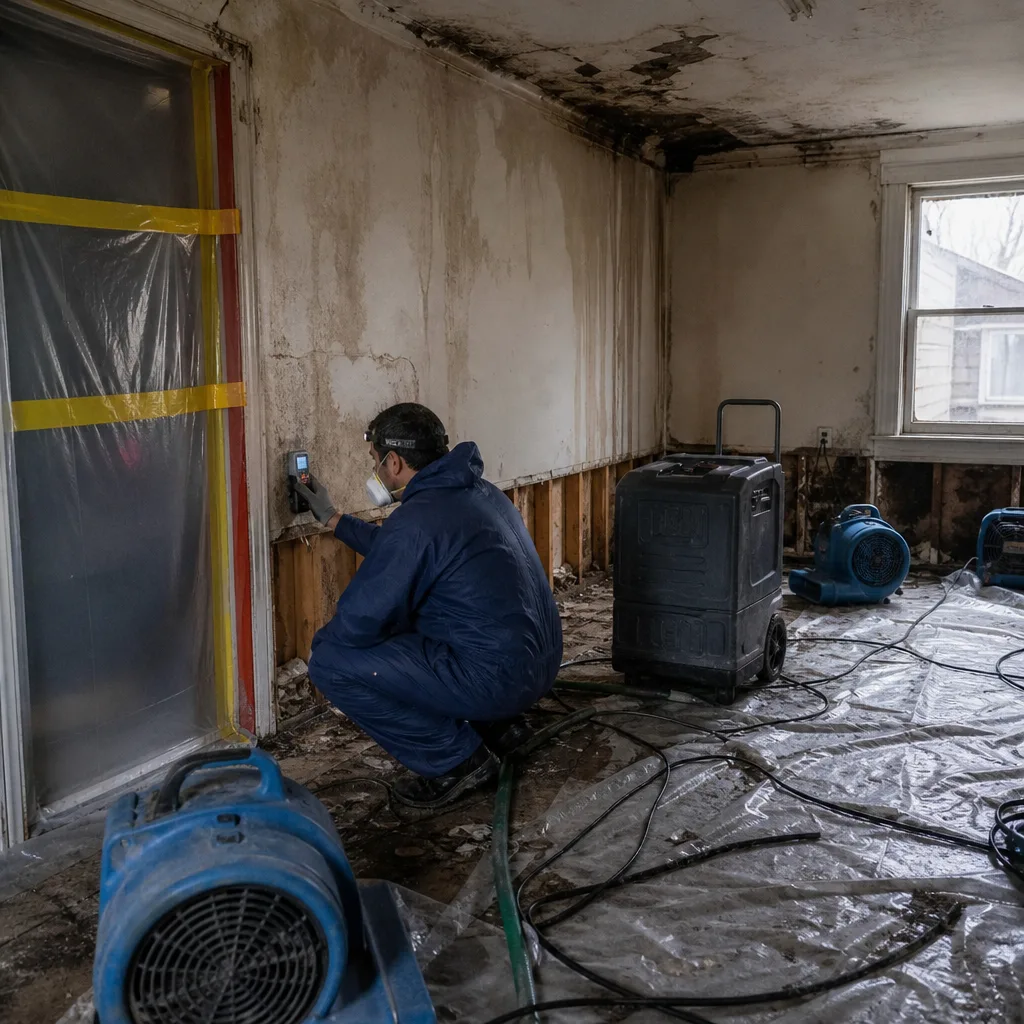 Before
 After
AfterWhen to Call a Professional
If your Yonkers home has sustained water damage that touches structure, electrical, plumbing, or any system beyond simple material replacement, call a restoration company before calling a general contractor. Our How to Hire a Damage Restoration Contractor in Yonkers: A Step-by-Step Guide walks you through vetting the right professional. A restoration company understands the difference between mitigation and rebuild, knows which work triggers Yonkers permits, and can document the process in the language insurers and title companies expect. If you are in a flood zone near the Hudson or Saw Mill corridors, that expertise matters even more. If you have already discovered unpermitted work from a previous repair, the same guidance applies: get a professional assessment of what is there and what the Building Department will want to see.
Marsh Water Damage Yonkers offers free estimates for restoration projects throughout Yonkers. Call (914) 233-3437 for an assessment that includes a written scope and a clear statement of permit requirements for your specific work. We have served Yonkers since 2005 and understand the Building Department process from the contractor side.
Frequently Asked Questions
No, replacing wet drywall with new drywall in the same location and same configuration is classified as maintenance and repair under New York State code and does not require a Yonkers permit. If the work involves moving walls, changing electrical, or altering the structure, a permit is required. When in doubt, call the Yonkers Building Department before reopening the wall.
Emergency mitigation and drying work can begin immediately without any permit, because Yonkers treats stopping the source and protecting the structure as life-safety work. The homeowner or contractor must notify the Yonkers Building Department within 72 hours of starting emergency work. Call (914) 233-3437 for a restoration team that handles the notice for you.
Your insurance policy requires repairs to comply with local law, and if the work required a permit that was never obtained, the insurer may withhold the recoverable depreciation portion of your claim. For structural claims, insurers increasingly request proof of Yonkers permit closure before releasing final payments. The permit protects your claim, not just your property.
Mold remediation that is purely cleaning and surface treatment requires no permit under New York law. Mold work that requires removing and replacing drywall is still repair if the materials are matched in kind, but if the remediation reveals rotted framing or requires wiring changes, the work crosses into permit territory. Ask for a written scope before any demolition so you know which side of the line the job falls on.
You inherited the problem, and it surfaces at selling time when the title search flags the unpermitted work. Yonkers has a retroactive permit process that involves exposing the work for inspection, fixing any violations, paying fees, and getting the permit closed. It is slower and more expensive than doing it right the first time, but it is solvable.
Check the FEMA Flood Map Service Center online or call the Yonkers Building Department with your address. Properties near the Hudson River or Saw Mill River may be in A or AE zones where substantial damage rules and floodplain development permits change what you are allowed to rebuild.
The Bottom Line
Restoration permits in Yonkers are not paperwork for its own sake. They protect your insurance claim, your property title, and your ability to sell without a legal detour. Most water and mold restoration work falls on the no-permit side of the repair-versus-alteration line, but the exceptions involve structure and systems, which are exactly the areas where mistakes are expensive. Emergency work has a 72-hour notice path that preserves your right to file later. Flood zones add another layer of code requirements that most homeowners never see coming. The protection is simple: get a written scope before work starts, confirm permit responsibility in the agreement, and never pay in full until the permits are closed. If you need help assessing a restoration project in Yonkers, storm damage restoration in Yonkers or any structural water damage should begin with a call to the professionals at Marsh Water Damage Yonkers home base.
Written by Tobias Reyner, Owner at Marsh Water Damage Yonkers, serving Yonkers since 2005.